How is it with your soul? My friends, how is it with your soul?
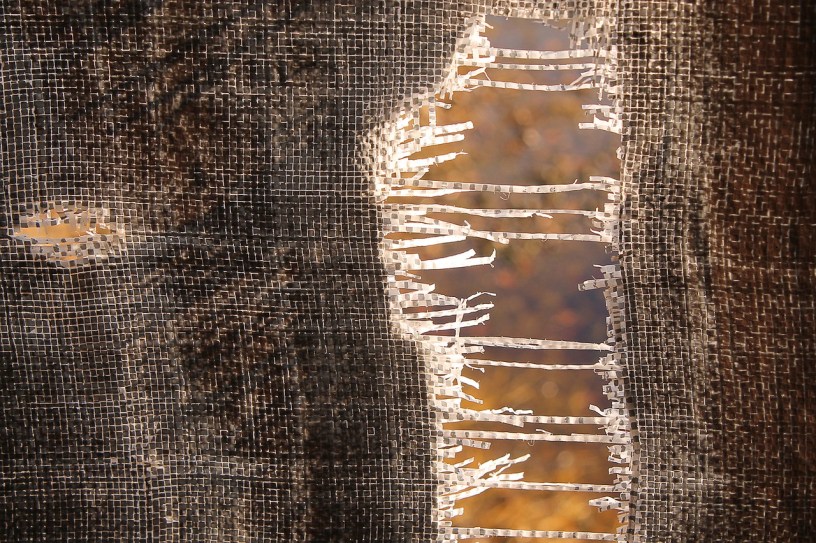
I want to address a struggle that a number of folks have shared with me that they’ve experienced lately, especially during the pandemic. That is the experience of painful divisions within families along the fault lines running through our society that have been tearing open lately. You know, all the fraught conflict around pandemic response, vaccinations, masking; the divisions between political parties and political candidates; divisions around racial justice and policing; you name it.
All the conflicts going on in our society at large have been playing out within families, extended families and nuclear families, and at times playing out in ways that have resulted in bitterness, hurt, resentment, major splits. I’ve also been hearing stories of families that are managing to cope with it okay, or have had some reconciliation after damage, but it’s hard.
Because these conflicts within families keep coming up in what folks want to talk with me about, as a pastor, I want to be sure you all know that you’re not alone in that. This is something to name and acknowledge, so we can help each other out with it, pray with each other about it, and reflect on it together with the resources of our faith.
So, for my part, I turned to the bible, to see what guidance may be found there. I’ll share some reflections on what I found, and perhaps by God’s grace some of it may be helpful to you..
We could start with the beatitudes. Jesus taught in the beatitudes, “Blessed are the peacemakers, for they shall be called children of God.” (Matt. 5:9). The word “peace maker” here is more like peace worker, a laborer for peace. But this peace isn’t just the absence of conflict, but the presence of Shalom, what in the United Church of Christ we call “A Just Peace.”
In the next breath in the beatitudes Jesus said, “Blessed are those who are persecuted for the sake of what is right, for theirs is the Realm of Heaven …” He also blessed those who grieve, those who are gentle, those who hunger and thirst for justice.
These are all experiences we may relate to when it comes to the experience of having the fault lines in our society erupt in our family; Persecution for the sake of what is right, when it comes to urgent, life and death issues; Hunger and thirst for just and right relations; Grief; The labor of making peace. What Jesus is saying is that engaging with all these things can be a blessing, can be participating in the activity of the Divine through this fallen world. Regardless of the outcome. And it is good to keep the faith that the outcome can be good, despite what’s happening in the moment, by the grace of God, and given some time.
In the Gospel of Thomas Jesus said, “If two make peace with each other in the same house, they will say to the mountain, ‘Move!’ and it will move.” (Thomas 48)
This image of moving mountains comes up a couple of times in Jesus’ teachings, to show the power of the kind of faith we’re talking about here. It also maybe shows how hard it can be, this task of making peace within families, like moving a mountian.
Then there is the beautiful Psalm 133:
“Behold, how good and pleasant it is
When siblings dwell in unity!
It is like vistas seen from
Atop a mountain one has climbed
Or like the stillness of a sunset
After a long day’s work.
It is like a shimmering rainbow,
Braking through a summer rain.
When people dwell in harmony,
The star of Truth appears!”
A beautiful vision. At some level I think we all yearn for this harmony, we know it’s possible, it can feel so near and yet so far.
It is important to notice that this Psalm also has images for hardship in talking about how wonderful it is when there is unity among siblings: The sunset after a long day’s work, the beautiful view after climbing a mountain, a rainbow after a storm.
Okay, beautiful psalm, maybe that’s the harmony we yearn for, but aren’t we talking about some irreconcilable differences, about urgent matters of life and death. Well, Jesus for one got very real about this sort of thing.
Luke 12:49-53
“I came to bring fire to the earth, and how I wish it were already kindled! I have a baptism with which to be baptized, and what stress I am under until it is completed! Do you think that I have come to bring peace to the earth? No, I tell you, but rather division! From now on five in one household will be divided, three against two and two against three; they will be divided:
father against son
and son against father,
mother against daughter
and daughter against mother,
mother-in-law against her daughter-in-law
and daughter-in-law against mother-in-law.”
Wow, how about that? Jesus was very clear that what he was up to would result in conflict and division that would even split families apart. He was just honest about that.
And as a matter of fact, Jesus made a point of showing how the purpose he was living out could run counter to “family values.”
Earlier in the Gospel of Luke, Mother Mary and Jesus’ brothers came to see him. But there was such a crowd around Jesus that they couldn’t get to him.
Someone noticed that and said to Jesus, “Hey, your mom and your brothers are here trying to see you but they can’t get through the crowd.”
But Jesus answered, “My mother and my brothers are those hearing the word of God and doing it” (Luke 8:19-21). And he moved on.
How’s that for family values? How’s that for honoring thy mother and they father? What’s going on here?
There are several times in the gospel stories where Jesus was actively hostile to family ties, just as he at times was actively hostile to tribal ties and religious ties.
This was because Jesus was embodying a radical new manifestation of God’s love, that endeavored to make a new humanity living out a way of being with God and with each other, that is realigned with the Creator of all the cosmos.
This involved remaking our deepest allegiances. As the Apostle Paul said, “In Christ, there is no Jew or Gentile, male or female, enslaved or free.” Those were the dominant divisions in his society.
Jesus often referred to the Divine as Abba. This is often translated as “Father,” but Abba is really more like “Papa,” the loving and familiar way that a child calls to their papa. Now, we know God is beyond gender, so Amma, Momma, is just as valid a way to evoke the relationship that Jesus is drawing on. But the point here is that relationship, if God is like a Divine parent, then all humanity are children of God, when we are in right relationship. Jesus had a lot to say about becoming children of God. As children of God, above and beyond being children of our biological parents, we are allsiblings to one another.
So, when Jesus said, in the Gospel of Thomas, “Love your siblings like your soul. Guard each of them like the pupil of your eye,” (Thomas 25) he wasn’t talking about the other children your mother gave birth to. He was talking all the children of all the mothers, especially those who have no family, or were cast out of their family.
Living this way is bound to result in conflict with a society that’s structured on deep family allegiances. This is bound to result in perhaps irreconcilable differences. But it’s not seeking out conflict for its own sake. It’s seeking out unity, and divisiveness is the reaction, in this sin sick world.
So, one thing this can mean for us is that some conflicts, some divisions, are important, inevitable. Maybe that can take some of the sting out of distress.
And Jesus and his new siblings in his movement had sound teachings about how to handle those conflicts when they arise. These teachings make it clear that it is ultimate unity before God that is the motivation. Love your enemies. Bless those who curse you. Judge not lest ye be judged. Be angry, yet do not sin.
This is a way of engaging with conflict with courageous hearts that are open to the humanity of the opponent, in broader view of the meaning of the conflict, and rooted in a humble and strong way, in what is true and good.
These compassionate rules of engagement are good antidotes to just how venomous things have gotten in how people treat each other in this age of social media. At the same time, it’s important to stay safe. And a lot of the more painful stories people have shared with me have been when things have gotten so hostile that it’s just not safe for them to engage anymore. Social media, it seems, has really sharpened the edges of how many people think it’s appropriate to relate to each other. When there is separation, perhaps one thing to learn from the Jesus movement is to take comfort and courage from the much larger family you belong to, your belonging to humanity as a whole, as we all belong to God. Take the big view, take the long view.
Now, I’m not going to try to sum this up with some grand conclusion. I don’t have a big picture of what’s all going on in our society and in our families today. I just hope that naming this, and reflecting some on what perspective we can get from scripture has offered something that you may find helpful.
I thank God for grace. I thank God for courage. I thank God for greater perspective.
(You may view video of this sermon on our church’s YouTube channel).
 The Dandelion Way