This time of the season, the world that surrounds us tends to get darker and colder and bleaker. There are some golden autumn days and evenings left – like yesterday there was a break in the rain and the clouds for a beautiful evening. But these are fewer and father between than earlier in the fall. And this is the time here in this valley when the fog starts to roll in. This is why it can get hard emotionally for some folks this season.
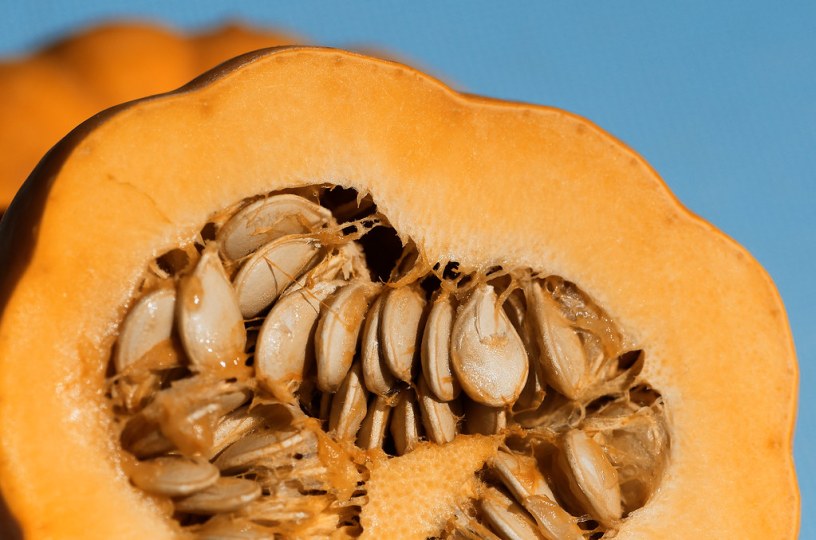
In talking about this, someone pointed out to me recently that they take comfort in knowing that this is the time when the last seeds are falling and settling into the soil and hunkering into their husks to overwinter. That overwintering is important, it’s what’s necessary for there to be new life again in the spring. This can be a time of more quietness, inwardness, and letting things gestate.
Now, this is also a time of harvest. There is the last burst of abundance from all that the sun and the rains from spring through summer and fall have brought forth from the earth. This is time for taking the fruits of the harvest and celebrating them and giving thanks for them and sharing them with glad and generous hearts, for God is good.
What this all means is that the time of the harvest is also the time when seeds begin to gestate for the sake of future harvests.
It is an opportunity to name and reflect on what we have been harvesting in our lives, especially in our spiritual lives, as individuals and as a community of faith or other soulful communities you belong to.
It is also an opportunity to name and reflect on what seeds are being planted for the future, seeds that need time to gestate.
If it’s any help in reflecting on this, one succinct way we’ve found to describe the fruits of the spirit in the life of our community of faith here, is that which brings a “Wider embrace and Deeper love.”
How have we been growing into that, by the Grace of God – growing in to a wider embrace and deeper love?
What are the harvests of that in our lives? What are the seeds that still gestate?
In reflecting on this it can be helpful, as it usually is, to reflect on what Jesus had to say about the matter.
Seeds & growth & harvest are images that Jesus uses quite often in his teachings about the Realm of God on earth. He was an earthy guy, he lived among people who were close to the earth, mostly peasants, so Jesus used earthy images in teaching about what cannot really be put into words, but rather sensed and felt and awakened to.
So, let’s hear one of Jesus’ seed parables:
Jesus said, “Such is the Ream of God: Suppose someone casts seed upon the earth, and sleeps and rises night and day, and the seed sprouts and increases while the sower is unaware of it. The earth bears fruit of itself, first a shoot, then an ear, then the full grain within the ear. But, when the grain permits, the planter immediately extends the scythe, because the harvest has come.” – Mark 4:26-29
Now, what do you notice in this parable?
Is there anything that you find surprising? Anything that’s puzzling?
I find it intriguing how hands off the planter is, sleeping and rising, day after day, not even aware that the seed is sprouting and growing.
The earth bears fruit of itself, Jesus says. The seed grows because it is its nature.
And then, lo and behold, an abundant harvest! The planter then springs up swiftly to gather the harvest.
I for one feel a lot of grace in this, a kind of natural ease in bringing forth the life of the spirit and the fruits of the spirit.
If you would, think back to the harvests that you named for yourself, in the life of your soul, or in the life of our spiritual community.
How much did this seem to come of its own accord? How fully were you aware of this growing, day by day, night by night, before you noticed – “Wow! There’s the fruit!”?
“I’m a little more gentle when I’m frustrated;” “I’m a little more courageous when I see something that isn’t right;” “I live a little more by faith;” “I feel a little more the nearness of God.”
How much these sort of things seem to come by grace! And by allowing a natural life-full-ness to abound of its own accord?
Several years ago, when Rev. Courtney Stange-Tregear, one of our Conference Ministers in the Pacific Northwest UCC, came to work with us on church vitality, she told a story from the Frog & Toad children’s books where the character Toad was yelling at seeds to get them to grow. What Toad learned is that you can’t get seeds to grow by staring at them and telling them to grow. You need to give the seed some good soil and sun and water and love, and then relax and let it be.
Pastor Courtney was teaching us about the way to go about cultivating vitality in a church community.
Now, a likely way to understand these seed parables of Jesus is to see the sower as being God. So, if you think about your harvest that way, how much was there a dramatic divine intervention in the process? And if there was – because, yes, there can be – was it constant, day after day, night after night? Or did it also give time and space for things to grow of their own accord?
And then, once the fruit of the spirit is ready, how quickly is there the opportunity for harvest?
When I reflect on my own spiritual life, it does seem that as soon as I’m ready to give of myself in a new way, or even before I realize that I am ready: boom, there’s an urgent opportunity that calls on you. Whether or not I feel myself to be ready, it’s clear, God’s like, “Time to do it. The realm of heaven on earth needs this fruit.”
Yet still, I don’t know about you, but to be honest, sometimes I still refuse, and the fruit can rot on the vine.
So, let’s reflect a little more on what gets in the way of the fruits of the spirit. This leads us to another of Jesus’ parables of the seeds.
Jesus began to teach them many things in parables, and in his teaching he said to them, “Listen! A sower went out to sow. And as he sowed, some seed fell on the path, and the birds came and ate it up. Other seed fell on rocky ground, where it did not have much soil, and it sprang up quickly, since it had no depth of soil. And when the sun rose, it was scorched; and since it had no root, it withered away. Other seed fell among thorns, and the thorns grew up and choked it, and it yielded no grain. Other seed fell into good soil and brought forth grain, growing up and increasing and yielding thirty and sixty and a hundredfold.”– Mark 4:2-8
So, if we reflect again on the fruits and the seeds of our religious and spiritual lives, as individuals and as a community, what are the challenges to growth? What’s the hard ground that prevent roots from taking hold; rocky soil that doesn’t nourish; thorny weeds that crowd and choke?
Now, Jesus himself offered an interpretation to his disciples:
The seed is the word of God.
The rocky un-nourishing soil is when we receive at first with lots of enthusiasm, but when things get tough we don’t hang in there.
The hard soil is when the Slanderer, prevents the seed from even taking root – the word is satanas, Satan, which means the one who slanders, the one who accuses falsely in order to sabotage good things. So, this names the forces of mockery and the forces of judgmentalism that can cause us to turn away from the life of our soul and our relationship with God.
And finally, the thorns Jesus names as anxieties and greed and superficial pleasure that throttle – the word is “throttle” – the growth of the Word of God within our lives.
All these are very important to name as conditions and forces in our lives that can prevent the good things of the soul and in our lives with God from coming to fruition. And I’m sure we could go on to name other things impediments too.
But before we get too preoccupied with negative things, let’s take a step back and notice what else is going on with this parable, the famous Parable of the Sower.
Is there anything about this Sower of seeds that’s surprising?
We have farmers here, we have gardeners here. Do you bother to plant seeds in the weeds? Do you bother to plant seeds on the road? Do you bother to plant seeds in soil that you know is not well prepared?
No. That’s a waste. That’s dumb. Who does that?
God does.
By our standards God is a reckless farmer, throwing seeds all over the place.
And remember the first parable. God’s lazy too. As a farmer, God is reckless and lazy.
Why?
Well, maybe God knows something we don’t.
These seed parables are all about Grace.
This is what I really love about Jesus. These are trickster teachings about Grace.
Now, remember those seeds that fell on rocky ground, or on the road, or among the thorns? How many ways do we relate to that? And how many sermons about this parable have made us feel guilt or shame or regret about our rockiness, our hardness, our thorniness when it comes to these fruits of the spirit?
God is a reckless and lazy planter for a reason. Because the seeds of Grace are tough enough bide their time until there’s a scrap of life enough to begin to break through rock and crack through sidewalks.
Don’t take it from me. Take it from the great medieval spiritual genius Meister Eckhart:
“God has sowed God’s image and likeness. God sows the good seed, the roots of all wisdom, all knowledge, all virtues, all goodness – the seed of the divine nature. The seed of the divine nature is the Son of God, the Word of God…
The seed of God is in us. If the seed has a good, wise, and industrious cultivator, it will thrive all the more and grow up to God whose seed it is, and the fruit would be equal to the nature of God…
God has sown this seed, and inserted it and borne it. Thus while this seed may be crowded, hidden away, and never cultivated, it will still never be obliterated. It glows and shines, gives off light, burns, and is unceasingly inclined toward God.” – Meister Eckhart (Breakthrough: Meister Eckhart’s Creation Spirituality in New Translation, ed. Matthew Fox, pg. 118)
(Delivered Sunday, November 7th, 2021 at First Congregational church of Walla Walla, by Rev. Nathaniel Mahlberg. You may view video of the service here.)
Image: “Halloween seeds” by Dr Pitch is marked with CC PDM 1.0
 The Dandelion Way