“Do not be afraid,”
That’s what the angel first said to the shepherds that night, before telling them the good news of Jesus’ birth.
“Do not be afraid,”
That’s what the angel first said to Mary, nine months prior, before telling her the good news that she will soon become pregnant and give birth to a special child.
“Do not be afraid,”
That’s what the angel first said to Zacharias, before telling him the good news that his wife Elizabeth will soon become pregnant and give birth to a prophet, John, who will baptize Jesus.
“Do not be afraid.”
Why do these angels all say this? Because when an angel shows up, the natural reaction of any human being is to be scared out of your mind.
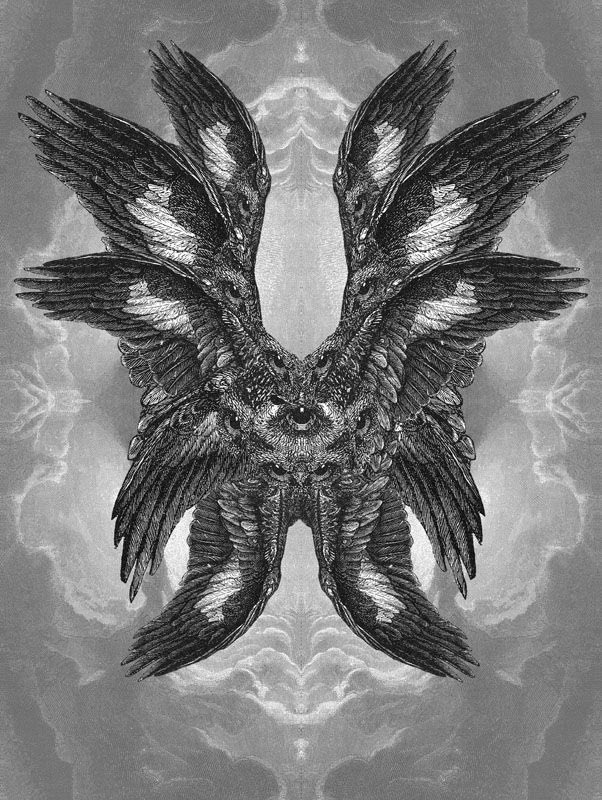
When we’re talking about angels as they appear in the biblical tradition, we’re not talking about chubby toddlers with wings, cavorting on cotton candy clouds; we’re not talking about tinkling harps and white robes and celestial supermodels who give you fluffy slippers and welcome you to some kind of members-only spa of eternity.
No, with the kinds of the angels we’re talking about, with the kinds of experiences recounted in the bible as encounters with angels, we’re talking about something like …
a rupture between dimensions that releases a blinding blast of transcendent reality that fries the circuits of any puny human brain.
“Every angel is terrifying,” in the words of the great visionary poet Rainer Maria Rilke, “Even if one of them pressed me suddenly against their heart:/ I would be consumed in that overwhelming existence. / For beauty is nothing but the beginning of terror, which we are still just able to endure,/ and we are so awed because it serenely disdains to annihilate us. / Every angel is terrifying.” – Rainer Maria Rilke, from Duino Elegies, trans. Stephen Mitchell
Whoa there, Reverend, this is your Christmas sermon?!
Look, we hear this Christmas story over and over, year after year – it’s gotten so domesticated. I want to be sure we know what’s at stake here.
When Jesus was born in Galilee more than 2000 years ago, we’re talking about tense, fearful times. People were easily spooked. And maybe we can relate to some of that these days, if we’re real about it.
Luke in his gospel makes a point of starting the Christmas story with all this historic information about Emperor Augustus decreeing a census when Quirinius was governor of Syria. He does this not to put us to sleep on Christmas Eve. But the opposite: For Luke’s original audience, this would have put them on the edges of their seats. It’s a striking way to start, because it makes it clear that this humble story is taking place in the context of the dramatic expansion of the Roman Empire, under its first emperor after Roman experiment in democracy collapsed.
This would have reminded Luke’s audience that in Galilee just before Jesus was born there had been an uprising among the Jewish people against the occupying Romans, which was an uprising that met a fearful end. And Caesar Augustus decreeing a census in the aftermath, which was for the purpose of taxation (without representation), is him asserting his imperial power over the region of Judaea, Galilee, and Syria. A lot people were not happy about that.
Luke is wanting us to know that Jesus is being born in the midst of a ratchetting up of tensions – unsettling, fearful times in the context of imperial power.
And there is a lot at stake here in terms of who “God” is understood to be, and how the divine is supposed to relate to humanity. Caesar was the “Son of god”. He was the representative of god on earth. The stories of his birth and exploits were the “gospels,” the “good news” of how he brought peace on earth as the “savior”, through the fearsome might of his armies.
Then, as now, “God” was co-opted and used by human authorities to instill fear in people, to threaten, to coerce, and to justify their own power.
Now, the true transcendent power of the true Divine Creator of all and everything in the universe, if we get a glimpse of that kind of power, we could feel something like fear, or even terror. But the Hebrew Prophets are clear that this means that no human authority can really claim God’s power as their own, because they are just as puny and brief before the reality of the Divine as anything else.
But the Good News here with the birth of Jesus is saying something even more than that.
Yes, “Every angel is terrifying,”
And yet, and yet, in the Gospel according to Luke, every angel says, “Do not be afraid.”
“Do not be afraid, for I bring you good news, of great joy, which will be for all the people. For unto you a child is born.” His name will be Jeshua, Jesus – “God Saves.” He will be called Emmanuel – “God is with us.”
This is extraordinary. And I hope we can feel in a fresh way how extraordinary this is.
Whatever fear we may feel when it comes to who we think God is, that fear is just of our own making. Often, it’s coming from what other people have told us to believe and feel about God, not from our actual experiences. And sometimes it’s from our ego freaking out because it may have to let go of being in control.
The reality is: We need not be afraid before God.
Jesus reveals God’s relationship with humanity to be one of mercy, one of grace, one of healing, one of love. Period.
Now, we can genuinely feel awe before the Holy One; we can genuinely feel humility; we can genuinely feel moral accountability; we can genuinely feel the demand to let go of the limbs that bear no fruit and let them burn away; we can genuinely feel that our selfhood could be “consumed in that overwhelming existence.” But Jesus revealed that all this is characterized by Divine Grace and Divine Love. We need not be afraid. Even the tyrants who were so afraid of Jesus’ Good News that they drove his family into exile, and hounded him at every step, they didn’t truly have to be afraid. They’d have to give up their power and ego, yes, but, ultimately, they’d receive a gift beyond measure.
None of us need be afraid.
So, on this Christmas Eve I invite all of us to reflect on whether we have any fears that are holding us back from a more open communion with the Divine. Do we fear judgment? Do we fear our so-called inadequacies? Do we fear relinquishing our own power? Do we fear stepping into our own potential that God gives us? Do we have fears due to doubts? Do we have fears due to images of ourselves or images of God that other people have taught us, but are in fact stumbling blocks?
We can each be honest with ourselves and before God about our fears. They’re there; fear happens; and we can let them go. Because, with the true God: We need not be afraid.
The truth is: we need not be afraid.
For that, I give thanks to God.
(Delivered Christmas Eve, 2021, by Rev. Nathaniel Mahlberg, at First Congregational church of Walla Walla)
(Image of Seraph: “Six Wings Black and White” by zeevveez is licensed underCC BY 2.0)
 The Dandelion Way