Here we are at the beginning of the season of Lent, the journey of 40 days and 40 nights leading towards Easter. I’ll share with you an exercise I’ve done, at least in part, with some small groups here.
The exercise is a serious of prayerful questions, of spiritual assessment and discernment. If you want, you can do it now, as I describe it. Or you can just listen, as you feel comfortable.
It starts by just take a moment to collect ourselves in a prayerful way, however works with you: settling in to a posture that’s stable and open, perhaps closing your eyes or lowering your lids, and breathing.
And then consider the question, in an honest way: How is it with you soul? How is it with your soul? Let your feeling guide you: “How is it with your soul?”
Next, you can shift into another question: “How is it with God right now?” Or you could say the Holy One, or whatever image or word helps to evoke the Divine for you? How is that relationship right now, that connection in your life?
In what ways have there been openings for you? What has been life-giving? Liberating? What has helped that for you? What has helped the wellness of your soul and your journey with your Creator, Eternal Spirit, Source of all being?
And then, in what ways have there been impediments for you? What’s been getting in the way of a relationship with God? What’s been hampering the wellness of your soul?
It may be helpful to ask if these impediments are tied to certain beliefs about God or beliefs about yourself that you’ve been taught.
If you like, you can write down some of your responses to these questions, if you have something to write with. Or just note for yourself mentally what all has come up for you.
Then here’s the last question: What would help you? What would help you nourish what has been going well with your soul and with God? What would help you let go of or move through the impediments for you? And is there a practice that could help with this? Something you could choose to do, or choose to not do?
The answer may come quickly for you, or it may take some time to percolate. But I invite you to be reflecting on it.
Traditionally the season of Lent is a time of fasting. The faithful abstain from eating meat or sweets or drinking alcohol or caffeine. Traditionally it’s a time of “repentance” as well – and I will remind you as I always do when this word comes up – that the Greek word here means a “change of heart” or a “metamorphosis of consciousness” – and the Hebrew word means “a turning,” “a reorientation.”
Most churches I’ve been involved with have taken a creative approach to Lenten practice. The invitation for these 40 days and 40 nights leading to Easter, moving from the end of winter into spring, is to experiment with a spiritual practice that can help with whatever change of heart or reorientation you’re needing. That can mean abstaining from something that distracts. It can mean adopting a new habit.
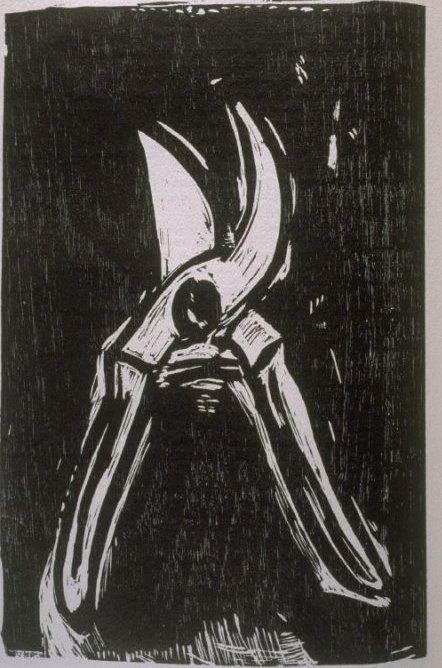
Jesus often uses the imagery of pruning plants – cutting off limbs that are dead or bear no fruit, or that crowd out the sun or dissipate the energy; and then nourishing the growth that does lead to good fruit, the fruits of the spirit, as the Apostle Paul likes to say.
These fruits of the spirit are clearly named as the results of a more loving, a more merciful, a more just sharing in the reality of God.
What pruning do we need for that? Where’s the dead wood? Where are the bitter fruits?
And what do we need to make sure gets more sun light and fresh air and clear water and rich compost? What concrete practices will help us in this?
Now I want to caution us from getting too individualistic about this. Jesus was always directing people into deeper relationship with each other as part and parcel of a deeper relationship with our God.
During Jesus’ famous 40 days and 40 nights of fasting in the wilderness after his baptism, he was faced with the practice to turn away from the temptations to use his gifts selfishly, to become powerful and dominant. He casts that all away as fruitless nonsense and embraces the call of radical love.
The Prophet Isaiah, as we just heard, railed against the ways that religious practice can so easily become just another exercise of ego, or a theater for human power – this is always a problem, pick your time in history, pick your culture, pick your religion, or anti-religion. We humans tend to make idols of ourselves and of our own power. The prophets are clear that these idols are thorny tangles of fruitless nonsense, that trap us in needless suffering.
The living God of Creation is constantly calling us to cut it out and cut it away; constantly calling us to renewal for the sake of the alleviation of suffering. The suffering in our world, our own suffering, is too great for us to get caught up for too long in the thorny tangles that keep us from cultivating and sharing our God-given gifts. “Isn’t this the fast I choose:” Isaiah says,
releasing wicked restraints, untying the ropes of a yoke,
setting free the mistreated,
and breaking every yoke?
7 Isn’t it sharing your bread with the hungry
and bringing the homeless poor into your house,
covering the naked when you see them,
and not hiding from your own family?”
Not only is the need too great, the reality of God is too great; the reality of what is possible with God is too great – the open possibilities offered to every moment by the Spirit of Life, they are too awesome for us to get caught up for too long in fruitless nonsense.
The Living God, the Eternal Spirit in which we live and move and have our being, is always calling us to renewal.
This holy season of Lent is yet another opportunity for us to practice saying Yes.
Thanks be to God.
 The Dandelion Way