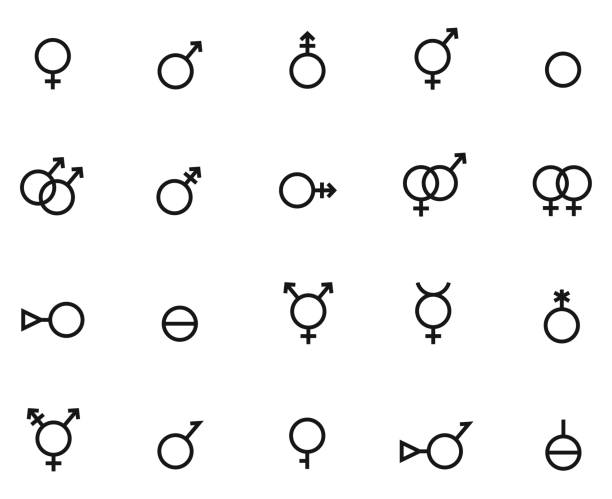
What words or images evoke God for you? Evoke the Divine?
I’d love to hear how you respond to that question. It’s a good thing to share with each other and to talk about together in a way that’s free of judgment so we can be honest.
What are the images, what are the words that, for you, help you draw nearer to that which many of us call God? What words or images express how you have experienced the Divine? Or what do you visualize or say when you pray?
Here’s another question:
Are there words and images for the Divine that have gotten in your way with your relationship with God? That you had to let go of and grow past, or that you would like to?
How much do the images and words we use for God shape our relationship with God, as well as with ourselves, and with each other?
What’s at stake in the choices we make, or don’t make, about how we speak of God?
When it comes to God, we must always begin and end with Mystery, Holy Mystery. We must always begin and end with wonder and awe before that holy Mystery whose tremendous, transcendent reality we can only gesture towards with words like “God” “The Divine” “The Holy One.”
When we dare to talk about God, not only must we begin and end with humility, but also with dignity, acknowledging the profound dignity as well as humility that the holy Mystery confers on all beings.
This is important to remember in how we can be faithful in how we use words and images for God: humility and dignity.
Our faith is centered around the ongoing revelation beginning in the book of Genesis that we are all made in the image of the Holy Creator. There is some universal essence at the deepest level of everyone’s being that is the reflection of the Holy Transcendent Source of all Being. This reflection of the image of God is what gives everyone, universally, the most profound value and dignity.
The danger in us using words and images for that which no word or image can come close, is that we make idols of those words and images. When we take human ideas for God Godself, the danger is that this can lead us away from humility, lead us away from dignity, and lead us away from the reality of God.
We have to be very careful that we aren’t making a god in our own image, or that we are worshipping a god that has been made in someone else’s image.
Now, we humans are inclined to do this – and we do have to start somewhere, after all, right? The important thing is for us to have humility about our images for God, and to allow God’s Grace to be on the move through and beyond them, challenging us to grow in our love and knowledge of the God beyond our understanding.
Alright, now that all of that is said,
Remember the questions I posed to us with the readings for today, regarding the gendered ways that we can often talk about or imagine God.
What are the consequences of speaking about God as if God is a man versus if God is a woman or non-gendered? What pronouns should we use for God? He? She? It? They? And why? Is there a correct answer and how do we know? Why does it matter?
These are important questions to ask because it is the case that constantly referring to God as “he” has shaped our understanding of God to picture God to be a man, especially given that we believe that Jesus was the Son of God, and Jesus was a man. So, our images for God have predominately been masculine. And it is the case that this has been used to exclude women and folks with other genders from full participation with God’s grace and with the life of the church. And this has too often blocked all of us from a much fuller understanding of the awesome transcendence of God beyond the limited images we try to frame around the Divine.
Now, my bringing this up is not about political correctness; it is about objective correctness. It is simply the fact of the matter that God is not a man, nor a woman, but way, way, way beyond human categories like gender.
First, just look at God’s creation. One way to learn about God is through God’s creation. Even if we just stick to the living beings that our Creator has created. Humans make up just 1/10,000th of the biomass on earth. By far, the most living things by weight are plants. Most plants have both male and female reproductive structures. The next biggest category of life are bacteria, which don’t even reproduce sexually. Next comes fungi, which reproduce in such complex ways that there are like tens of thousands of biological sexes. I could go on and on. I think I will. Earthworms are hermaphrodites. There are more than 10 times more earthworms than humans on earth by weight. Looking only at human beings, for every 1,000 babies born, one or two will have both male and female sex characteristics, and when we consider as well natural chromosomal variations, as many as 1-2% of us are born with a biology that doesn’t color within a strict division between male and female (Citations here, here, here, here, here, and here.)
God saw fit to create plants and bacteria and fungi and earthworms and all of us humans.
It’s safe to say that God isn’t too hung up about gender.
And when we look beyond the realm of living beings, objectively, the reality of God is beyond – far, far beyond – puny little human categories such male or female. God isn’t a being among other beings. I’ll say it again, because it’s hard to get our minds around:
God isn’t a being among other beings.
God can’t be compared to other beings in the ways that we compare two different things, like “this one is blue and this one is green;” “this one is male and this one is female.” These categories of comparison don’t apply to the Divine. God is in a whole other realm from that. God is the source of all being – and beyond all being.
The reality of God breaks our language. The reality of God burns through our images. The reality of God blows our puny little minds.
And yet …
God is not only far beyond what we have any hope of comprehending.
We do all bear deep within our essence reflections of Divine, afterall.
God is intimate as well as infinite, and comes to us in ways that we can relate to.
We have the primal need to feel how we are in relationship with God. And it is by the gift of God grace we can open our mind and heart and soul and say You, You, O Holy One, to You I sing. When we sing, this Mystery responds, and addresses us, beckons us into deeper relationship.
That relationship with God can feel to us to be like with a mother, who gives birth to us, who nurses us and nurtures us. And it can feel to us to be like with a father, who supports us, and guides us, and protects us. Or God can feel to us to be like a teacher or a savior or a friend, like Jesus.
So, yes, we can use words and images for God that have a gendered aspect in a way that cultivates that humility and that dignity before the Mystery. But it is very important that the words and images we use for God lead beyond themselves, rather than locking us into idolatry, and locking other people out. Our language needs to be expansive.
The second reading for today, a very early Christian prayer from Jesus followers in Egypt, is very interesting because it refers to God as “Father,” but then has God “the Father” giving birth as a Mother does. The reality of God breaks beyond the masculine category. (You can find the text of this prayer at the end of this post).
The Bible does overall have a predominance of masculine images and pronouns for God. But it is not at all locked into only masculine ideas. There are also many passages of scripture with clearly feminine images. Some examples:
In Isaiah, God says, “As a mother comforts her child, so I will comfort you; you shall be comforted in Jerusalem.” – Isaiah 66:13
“Can a woman forget her nursing child, or show no compassion for the child of her womb? Even these may forget, yet I will not forget you.” – Isaiah 49:15
Psalm 131: “I have calmed and quieted my soul, like a weaned child with its mother; my soul is like the weaned child that is with me.”
In the Book of Proverbs the Wisdom of God is a female character. Wisdom, Chokhmah, was the first of God’s creation, we hear. And it was only with her, only through Wisdom that God is able to create everything else. She pervades the universe as the fundamental order of creation. And when she speaks to us, it’s heard as a powerful female voice, challenging us to live in a wise and prudent way.
And then there are plenty of words and images for God in the Bible that have nothing to do with gender, but rather with Divine qualities such as God’s creative power, or glory, or mercy, or justice. When God appeared to Moses on Sinai, Moses asked “Who are you?” God said, “I am that I am.” Moses then asked “What’s your name.” God replied “YHWH”- no word but the breath behind all words.
The translation of the creation story from Genesis that we heard contains this range of gendered and non-gendered ways of speaking about God (see the end of this post for the text). The translator, Professor Wilda C. Gafney, is bringing our attention to how in the text masculine verbs are used for God and feminine for the Spirit, and how one of the main names for God in Genesis, Elohim, is in fact a plural noun. “Elohim” is plural: They.
They created humankind in Their own image.
Now, Elohim is plural in Hebrew like several abstract nouns are plural in Hebrew. So, Elohim is like Goodness, Beauty, Truth – and, of course, Elohim is those things and more. There is no gender. And God is One in a way that contains all things. There’s a mysterious plurality within the transcendent unity of God.
Here is what Rev. Dr. Gafney’s wrote about her translations of biblical texts:
“This language, my language, like all language, is simply inadequate to express the fullness of God in and beyond the world or even in human creation.
Most simply, these translations seek to offer and extend the embrace of the scripture to all who read and hear that they might see and hear themselves in them and spoken to by them. Similarly, taking seriously that we are all created in the image of God, these translations seek to display God in whose Image we see ourselves reflected and reflecting.” (Gafney, Wilda, “A Women’s Lectionary for the Whole Church,” xv).
So, I’m not telling you “Stop saying ‘He’ for God. Stop saying ‘Father.’”
What I am encouraging is, “Don’t only say ‘He;’ Try out what it is like to say ‘She’ or ‘They’ or to not use pronouns at all. Let’s allow the amazing majesty and power of God to grow and expand our ways of speaking about God and praying to God.
When it comes to God, we must always begin and end with Mystery, Holy Mystery. We must always begin and end with wonder and awe
For this, and for all the ways you all reflect the image of God, I give thanks.
Thanks be to God.
(Delivered Sunday, August 21, 2022, by Rev. Nathaniel Mahlberg at United Church of Christ at Valley Forge)
Genesis 1:1-2, 26-27; 2:1-2
Translation by Wilda C. Gafney
When beginning he, God, created the heavens and the earth, the earth was shapeless and formless and bleakness covered the face of the deep, which the Spirit of God, she, fluttered over the face of the waters …
And God said, “Let us make humankind in our image, according to our likeness; let them rule over the fish of the sea, and the birds of the heavens, and the animals, and the whole earth, and over every creeping creature that creeps upon the earth.”
So God created humankind in God’s own image,
In God’s own image, God created them;
Female and male, God created them …
And the heavens and the earth were complete, along with all their multitude. Then God finished on the seventh day the work that God had done, and rested on the seventh day from all the work that they had done.
A Prayer of Thanksgiving, from an early Coptic Christian community
This is the prayer they said:
We give thanks to you,
Every life and heart stretches toward you,
O name untroubled,
Honored with the name of God,
Praised with the name of Father
…
We rejoice and are enlightened by your knowledge.
We rejoice that you have taught us about yourself.
We rejoice that in the body
You have made us divine through your knowledge.
The thanksgiving of the human who reaches you
Is this alone:
That we know you.
We have known you,
O light of mind
O light of life,
We have known you.
O womb of all that grows,
We have known you.
O womb pregnant with the nature of
The Father,
We have known you.
O never-ending endurance of the
Father who gives birth,
So we worship your goodness
 The Dandelion Way