A woman learns she’s pregnant. She goes to share the good news with her dear cousin, who is also pregnant, a little further long. The cousin asks her, “How are you feeling?”
She replies, “I feel so blessed. I can’t wait for God to knock down everyone who’s on their high horse and share out to us poor folks all that the rich have horded. How are you feeling?”
How’s that for Mary meek and mild?
Just imagine what that means about her life and her people’s lives and about how she has experienced God at work?
That’s what Mary says about the holy hope and sacred promise she finds in anticipating the birth of her child.
Then, years later, when that child she raises comes of age and comes into his own, what does he tell everyone?
“I feel so blessed.
God has sent me to bring good news to the oppressed,
to bind up the brokenhearted,
to proclaim liberty to the captives
and release to the prisoners, to proclaim God’s Jubilee.”
That’s the holy hope and sacred promise he’s intent on living out.
For both Mary and Jesus, the blessing and promise they understood for their lives has everything to do with naming very clearly the oppression and injustice and despair in the lives of their people;
and naming very clearly that it does not have to be this way – liberation is not only possible but promised …
and naming very clearly that all this has everything to do with their overwhelming experience of how the God of all Creation loves and cares for the living beings of this world, and can join with us in our efforts to for a more just and loving social condition for each other.
Now, this didn’t come out of nowhere.
This is part of the great revelation and revolution set in motion through the Hebrew Prophets. Mary and Jesus are making it very clear that what they are up to is the cresting of a great wave that roared into being through the prophets of their people and had swelled through hundreds of generations of their ancestors before them, who yearned and loved and suffered and wrestled with sacred insight as empires rose and fell and clashed and crumbled around them.
The Prophet Isaiah, in particular, has a special place throughout the gospel stories shared about Jesus of Nazareth, son of Mary.
Many who followed Jesus saw in him the embodiment of Isaiah’s visionary expectations: God’s love and justice and saving grace passionately engaged with the strife and troubles of this world. Jesus’ words we just heard that he spoke at the launch of his public life and ministry are a direct quotation from Isaiah.
And throughout the history of Christianity, the words of Isaiah feature prominently in particular in this season of Advent and Christmas, when we renew our experience of the birth of Christ.
So, this Advent I would like us to explore together the Prophet Isaiah with the hopes of enriching our understanding of what the birth of Jesus meant and continues to mean for us in our place and time.
For several months now, our weekly bible study class has been studying the Hebrew Prophets – we started with Amos and have moved through Jonah and Micah and now have been making our way slowly and steadily through the book of Isaiah.
And our Advent book group starting this week will be discussing a wonderful book called “The Liberating Path of the Hebrew Prophets: Then & Now” by Rabbi Nahum Ward-Lev, who has for many years led interfaith bible studies.
The insights that you all have shared and will be sharing through these studies will be informing what I have to offer these next three Sundays.
So, who was this Isaiah?
Isaiah lived more than 700 years before Jesus. He lived at a time when the Hebrew people were bitterly divided between a southern kingdom of Judah, with a capital of Jerusalem, and a northern kingdom of Israel, with a capital of Samaria. Isaiah was from Judah. During his life the Assyrian empire based in the fertile crescent conquered the region, destroying the northern kingdom of Israel, and parts of Judah. Jerusalem, however, was spared.
That’s the context for the first part of the book of Isaiah. But the later chapters also speak to the experience almost 200 years later when the Babylonian empire rises and conquers the Assyrian empire, all of its territory and more. The Babylonians destroyed Jerusalem, leveled the holy Temple, and took much of the population as slaves into captivity in Babylon.
Scholars think that this part of the book was written by a second prophet, who you could say was in the lineage, the school of the original prophet Isaiah. Those who say it was all one prophet say he was such a visionary that he could speak to and through hundreds of years of his people’s experience.
However it all came together, the book is a masterpiece. In our Bible study, folks often comment on the beauty of the language, and the power of what it uncovers. This book has spoken to generations and generations of the Hebrew people as they’ve faced so many other threats and profound challenges; and Isaiah has so spoken to generations and generations of Christians who also have yearned for God’s liberation.
What Isaiah uncovers are the grave consequences of oppression, injustice, and violence. He diagnoses these as the results of worshipping human powers rather than the One God of all Creation, whose name is beyond all name. His prognosis is that being so profoundly out of joint with the way and the will of the Creator will bring escalating suffering. Through that suffering, the proud will be humbled, those who worship their own might will be brought low.
Woe to those who make iniquitous decrees,
who write oppressive statutes,
to turn aside the needy from justice
and to rob the poor of my people of their right,
to make widows their spoil
and to plunder orphans!
Yet God’s passionate care for the people is such that God will see them through periods of destruction into times of renewal, restoration, fullness of life, and fullness of life lived by the light of a God of love and right-relations.
Rabbi Ward-Lev writes that, “the prophets are people who are imbued with God’s love for creation and consequent passion for justice. The encounter with this love and concern brings forth from the prophet the courage to face what others turn away from – the unsustainability of a society that oppresses the poor. At the same time, the soaring possibilities present in God’s loving attention to the world fires the prophet with the imaginative power to present the people with an alternative, live-giving future. Engagement with divine love, courage to condemn oppression, and imagination to envision an alternative future are three qualities that define the prophetic experience.” – “Liberating Path of the Hebrew Prophets” by Ward-Lev pg. 5
Isaiah’s visions of this “alternative, live-giving future,” are astonishing in their beauty. They have inspired countless generations of Jews and Christians to live on behalf of their hope in a better world. With God’s help, Isaiah says, people can live in ways that are peaceful and just and equitable.
Many of these passages of prophetic hope are those that the early Jesus followers understood to be pointing to the person of Jesus. “Here! Look! Here is our wonderful counselor, our prince of peace, the embodiment of God’s love who can lead us into the liberated life that God’s prophets have promised.”
A shoot will grow up from the stump of Jesse;
a branch will sprout from his roots.
The spirit of the Living Presence will rest upon him,
a spirit of wisdom and understanding,
a spirit of planning and strength,
a spirit of knowledge and awe of the Holy One Beyond Name.
He will delight in awe before the Holy I Am.
He won’t judge by appearances,
nor decide by hearsay.
He will judge the needy with righteousness,
and decide with equity for those who suffer in the land.
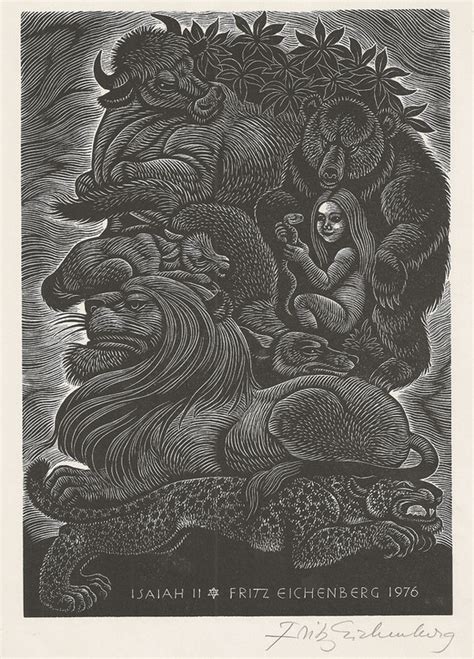
… They will not hurt or destroy
on all my holy mountain,
for the earth will be full of the knowledge of the Holy One
as the waters cover the sea.
So, in this season of expectation as we prepare for the renewed dawning of Christ in our midst and in the midst of the crises of our days, please allow yourself to hope. Not a naïve hope that dismisses all that’s so painfully twisted in our world. But a prophetic hope. The hope of our deepest yearning and widest imagination and fullest experience of the God of all Creation. A hope that can truly animate and sustain us in saying “Yes” to all that Jesus call us to, as the embodiment of God’s love on earth.
Thanks be to God.
(Delivered Sunday, November 27, 2022, by Rev. Nathaniel Mahlberg, at the United Church of Christ at Valley Forge)
(Image: Isaiah II by Fritz Eichenberg)
 The Dandelion Way