What would it be like if every time we washed our hands it was like Jesus washing our feet? What would it be like if this routine, habitual task became an opportunity to receive grace, to receive a gift that can only soften our hearts in gratitude?
Or what would it be like if every time we bathed ourselves or swam in a lake or in the ocean, it was like a remembrance of baptism, a cleansing, a release, a renewal, a rebirth, an opportunity to receive grace?
Or what would it be like if every time we poured water from the tap into a cup and drank it we allowed ourselves a moment to taste the miracle of this gift that is essential to each and all of our lives, to life itself?
Daily we have opportunities to honor water for being the gift from God that it is, and to honor the presence of the Spirit that in our tradition water so often conveys.
What would it be like if this reverence motivated the decisions we made about the shared waters of this earth – our streams and rivers and watersheds, our lakes and oceans and glaciers?
Within our biblical tradition, water has a tremendous scale and scope of sacred meaning. The hymn writer Sylvia Dunstan has very beautifully expressed this, in the hymn we’ll sing at the close of the service:
Crashing waters at creation
Ordered by the Spirit’s breath,
First to witness day’s beginning
From the brightness of night’s death
Parting waters stood and trembled
As the captives passed on through,
Washing off the chains of bondage –
Channel to a life made new.
Cleansing water once at Jordan
Closed around the One foretold,
Opened to reveal the glory
Ever new and ever old
Living water, never ending,
Quench the thrist and flood the soul.
Well-spring, Source of life eternal,
Drench our dryness, make us whole.
In our religious heritage, water isn’t merely an arbitrary, abstract symbol for heavenly, spiritual, un-earthly things. The water itself is essential.
Baptism wouldn’t be baptism without the River Jordan.
Jesus didn’t just go to a metaphor dictionary and pick something randomly when he said that what he offers are Living Waters Jesus which satisfy our deepest thirst.
One of the early “fathers of the church,” Tertullian, said that the Holy Spirit prefers water to bear its presence because of water’s physical qualities of being simple, fertile, cleansing, translucent. When we receive the spiritual gifts conveyed through water in our tradition, we must also respect and honor the physical gifts of water itself.
Our Christian tradition is sacramental, which means that we do not sever the spiritual from the physical, the heavenly from the earthly. It is a terrible misunderstanding to think otherwise. It’s in fact a heresy to have a severe dualism separating the sacred from the earthly.
It is no accident that the ancient practices of our Christian faith are all sacramental, where the everyday gifts of the earth we take into our bodies for nourishment – bread and wine and water and oil – become vessels for the presence of the Holy.
When we enter the mystery that through Christ we find the Divine In-the-flesh, this leads us to realize the sanctification of all Creation. All God’s Creation is shot through with the glory of God. We all, “live and move and have our being” in God’s Eternal Spirit, as the Apostle Paul says. And so, the Way of Jesus leads us to compassion and humility in all our relations.
Water is essential for life and for fullness of life, both physically and spiritually.
Agua es vida.
Water is life.
This isn’t just a slogan or a truism. It’s an extraordinary fact about the cosmos.
From the standpoint of physics and chemistry, it’s amazing that there is a substance with exactly the properties that water has, that has formed in enough abundance in the universe, and has come together in such quantities on earth, to allow for life to develop here, and evolve and thrive as it has for more than 3 billion years.
The science behind what makes water special is one of these tales of how finely tuned the universe is that can lead scientifically-minded folks to believe in a Divine Creator.
Basically, water is special because it’s wet.
That’s my brilliant summary of what I remember from college chemistry. Good-old H2O is special because the properties of oxygen and hydrogen and how they bond lead to a molecule with a shape and with an electromagnetic polarity that makes it inclined to stick to other molecules, and also stick to itself (I’m rattling this off like I understand it). That’s what makes it wet. Other liquids can be wet, but water is wet in all the right ways: it’s wet for lots of different kinds of things; it stays wet over a wide range of temperatures; it’s wet to itself, so it flows easily; but it’s not too wet that it clings to everything without ever letting go. These properties, along with a bunch of other things that I’m not qualified to really understand much less try to explain, make water uniquely suited to facilitate lots of different kinds of chemical reactions, which is what living beings need. (You can learn more from actual science writers here, here, and here. Thanks to UCCVF member and actual science writer, Christine Durst, PhD.)
This is why living organisms, basically, consist of sacs of water.
That’s my brilliant summary of what I remember from biology class. Life forms are sacs of water within sacs of water, which allow for the movement and interaction of all the mindboggling arrays of molecules and the flows of energy that make organisms hum.
We are all well-organized soup.
And this is nothing short of miraculous.
Agua es vida.
Water is life.
And we need to treat it this way.
Urgently.
Here we are in the midst of the hottest year on record globally, with surface ocean temperatures at the highest they’ve ever been recorded, by far, which threatens the survival of all kinds of life forms; arctic ice sheets and mountain glaciers are melting without being replenished at unprecedented rates; droughts are severe and common; aquifers are being depleted at unsustainable rates; plastics and microplastics pollute basically every body of water, harming creatures at all levels of the food chain … it’s a grim litany.
And now that I brought it up, some of you may be feeling sad or worried or despairing or powerless or numb … or angry that I’ve taken things in this direction.
Another important part of what it means that our faith is sacramental, is that it reveals to us how the living God is present in and through our fragility and brokenness and resilience as embodied beings. The bread and the body are broken, the wine and the blood are poured, Christ kneels to wash the weary feet of this world. Through this we know that our Holy Creator embraces us exactly as we are, and nourishes and cleanses us in our need, and shows us how God brings new life out of death.
This means we need to bring to invite God into all the ways we are broken and out of joint with the true and good and just and loving way that our Creator wishes for us to live with others, so that we may receive the renewal and the hope and the humility that is necessary for us to change our ways to be in better alignment with the astonishing sacredness of this beloved and broken Creation.
Through our sacramental faith in the way of Jesus, we have a very powerful way of transformation, hope, and courage.
For that I give thanks to God.
Delivered Sunday, August 6, 2023, by Rev. Nathaniel Mahlberg, at the United Church of Christ at Valley Forge
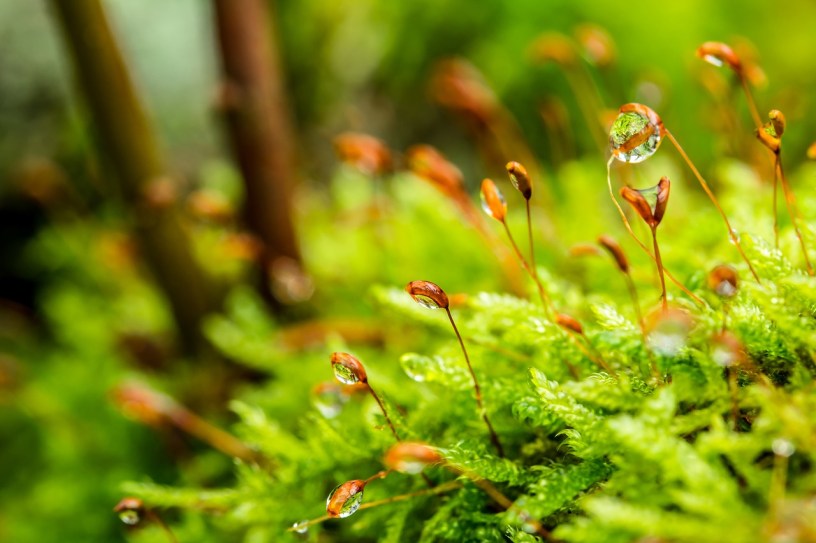
Image by Myriams-Fotos from Pixabay
 The Dandelion Way