Years ago, I was visiting Washington DC with some friends, when we went to the National Smithsonian Museum of Natural History. I expected to see some pretty cool things there. What I did not expect was that I would be overcome by what I can only describe as a religious experience, there in those hallowed halls of science.
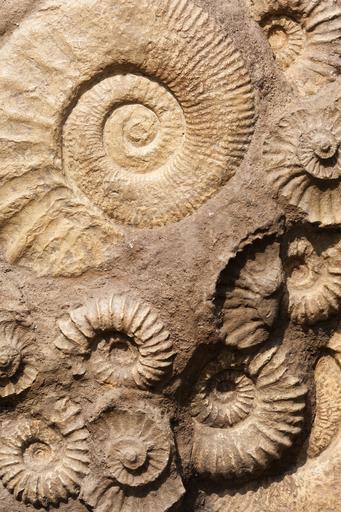
They had at the time an incredible exhibit where you walked, room by room, through the fossil record of the entire scope of the evolution of life on earth, as currently understood by science. Room by room, it took you from fossilized ribbons of bacterial colonies 3.5 billion years old, through epochs of change measured in the 100s of millions of years, through all the flourishings and extinctions of strange and wondrous forms of life finding new ways to survive and thrive before dying away, from towering monsters to the tiniest complexities of microscopic eco-systems, through to the emergence of the fossils of the strange and clever apes known as anatomically modern humans, appearing a mere 250 thousand years ago.
Immersed in this encounter with what remains of the remains of these countless other beings who shared life on earth, I fell into a reverence, approach each one with the kind of respect you’d show at the grave of an ancestor.
Through this reverence in the midst of the immensity of the scope of life on earth, a kind of reverie opened within me.
It was like the scales started to fall from my eyes and I glimpsed just how brief and tiny we are, and just how vast and ancient reality itself is. That mere glimpse overwhelmed me with awe and reverence and a kind of holy horror before the sublime that births and subsumes all life.
99.9% of all the species to ever exist on the face of the earth are now extinct. The time our species has been around is just a tiny sliver on the timeline of life on earth – not even .01% of all the seasons and cycles of life’s generations and generations and generations and generations …
How can we begin to fathom the scope of these facts?
In the midst of that experience, overwhelmed by a feeling of utter humility, in those halls of death unearthed, I was overcome with the beauty of it all, the astonishing sacredness of the extravagance of all this brief and tough and precious life. I could have fallen on my knees and wept for the holy mystery of it all.
This experience came upon me when I was in an anti-religious phase of my life, in my early 20s. I did at all go to the natural history museum trying to find confirmation of a faith or to fit things into a story I wanted to tell about God. But this experience was one of several that started to open me back up to evoking the Divine, and to feeling a relationship with the presence of a sublime transcendence.
Many of these experiences, in my life at least, happened outside of a sanctuary, outside of a book … many literally outside.
They are what leads me to feel so moved by the truth and beauty I can find expressed in sacred books and sanctuaries:
Psalm 90: 1-6, 12
O Holy Sovereign of the Universe,
you have been our dwelling place
throughout all generations.
Before the mountains were born
or you brought forth the whole world,
from everlasting to everlasting you are God.
You turn people back to dust,
saying, “Return to dust, you mortals.”
A thousand years in your sight
are like a day that has just gone by,
or like a watch in the night.
Yet you sweep people away; they are like a dream—
they are like the new grass of the morning:
In the morning it springs up new,
but by evening it is dry and withered.
Teach us to number our days,
that we may gain a heart of wisdom.
Psalm 19:1
The heavens declare the glory of God; the sky displays God’s handiwork. Day after day it speaks out; night after night it reveals God’s greatness.
Wise teachers of the Way of Jesus for centuries have taught that we can look to the natural world to learn about God just as well as we can look to the books of scripture.
Augustine of Hippo wrote:
‘Some people, in order to discover God, read books. But there is a great book: the very appearance of created things. Look above you! Look below you! Note it, Read it. God, whom you want to discover never wrote that book with ink. Instead, God set before your eyes the things that God had made. Can you ask for a louder voice than that? Why, heaven and earth shout to you: “God made me!”’
The idea that nature is as much “a book” to reveal God as scripture has a long history in Christianity. John Calvin even argued that human beings, as God created us, have a “sensus divinitas,” a natural sense of the divine we get through encounter with God’s glory as manifest through the natural world. But because of the ways that humans can turn away from a natural sense of the Divine and toward an obsessive, selfish regard for our own power – the condition called “sin” – we are dulled from this general revelation of God around us. That, Calvin argues, is why the revelations told in the Bible became necessary.
There is in a related way, a longstanding tradition in Christianity of respecting the gifts of our reason an important tool we have to arrive at understanding.
[The above is paraphrased from a wonderful recent book by a fellow UCC minister, Rev. Daniel Cooperrider, “Speak with the Earth and It Will Teach You: A Field Guide to the Bible.” pg 4-8.]
So, in case you need to hear this from a Pastor:
The Christian Fundamentalists are wrong that a literal reading of the Bible is the only measure of truth. They are wrong to condemn and fear the methods and theories and discoveries of science. And they are wrong to dismiss the validity of our own experience and our own reason.
As Christians we need to take seriously the science of evolution, and the science of ecology, and physics, and medical science, and so on. We need to take seriously the science of climate change and the ethical responsibility it asks of us.
We need take seriously all the other sources of wisdom and intelligence available to us, especially those of indigenous communities who have not forgotten what has helped their ancestors survive and thrive for 100s if not 1000s of generations.
We also need to take seriously our own sense of the Divine as present through the more-than-human world – to honor that, exercise that, explore that. We need to take seriously our own sense of the inherent worth and dignity of ourselves and of other people and of other beings.
All of this is urgently needed.
We are in the midst of a climate crisis that’s taking a terrible toll on so many human communities, and other species, and entire ecosystems.
We are in the midst of mass extinctions of species that’s on the scale of these millions of year epochs.
Human appetites run rampant are driving these changes on a global scale.
It’s amazing that human intelligence and curiosity and diligence has figured this out.
But it’s distressing that the smartest and wisest people are being ignored, and too many people with power right now want to just fight bitter brutal tribal wars. It’s maladaptive and self-destructive, and all of it all-too-human.
It’s important that people of faith are part of the solution. Not ignoring, denying, or dismissing uncomfortable truths about our capacity for self-destruction. Neither despairing of them. Rather, engaging with them with realism and hope. What a perspective of faith can bring is a bigger perspective, I hope, that can lower the anxiety and increase a live-giving willingness to adapt and improvise and overcome, to simplify our lives, to be grateful that enough is enough, and strive for there to be enough for everyone.
Faith can bring a trust that the God of Creation is a God of covenant with all life, that any season of destruction is followed by seasons of renewed flourishing. That’s what the stories in the Bible tell; and that’s what we can read into the fossil record. Both these sources also make it clear that hubris has consequences.
If we listen to the Holy Creator and seek to realign ourselves to sacred ways, we can have the grace and grit to adapt through the challenges we face, trusting that the whole world is in God’s hands and none of us have more than a mere glimpse of the full scope and meaning of what’s all playing out here these billions of years of life on earth.
Before the Great Mystery of it all, it’s awesome and awful scope, we can respond with humility and with fierce loyalty to the precious gift of our time together here on earth.
Teach us to number our days, O God
that we may gain a heart of wisdom.
You can view video of me delivering this sermon here.
Delivered Sunday, September 22, 2024, by Rev. Nathaniel Mahlberg, at the United Church of Christ at Valley Forge.
 The Dandelion Way