Do we want to pray like Jesus prayed? Do we yearn for some of the same living intimacy with God that Jesus knew? If we look at what the Gospel stories have to say about Jesus’ prayer life, they all have a striking theme:
Jesus went into the wilderness to pray. The most powerfully transformative prayer experiences in his life took place in a river or on a mountain or out in the desert.
If we’re seeking guidance or wisdom or a deeper relationship with God, and we ask ourselves “What would Jesus do?” the answer just may be, “Go down to the river and pray,” “Go out to the mountain and pray;” “Withdraw to a wild place and pray.”
According to the testimonies in the Bible, this was true for so many others of Jesus’ ancestors: Abraham, Hagar, Jacob, Moses, Job, Jonah, Ezekiel, Elijah, Isaiah, the Psalmists … and more. They each were given powerful experiences of the Divine through their encounter with sacred places and natural life and elements.
As the story goes, when Moses journeyed onto the high rocky outcrops of Mt Sinai and encountered a blaze of holy glory, he heard a voice that said “remove the sandals from your feet. You are on holy ground.”
Have you ever felt something like that? Even just a glimmer? Doesn’t need to be a full-blown revelation of the Divine, but a stirring of sacred awe, a sense of encounter with a great and holy mystery beyond ourselves. It’s quite a common, in fact. 71% percent of American adults often “feel a deep sense of wonder about the universe,” according to the Pew Research Center. Many folks of various faiths and no faith report having experienced a sense of the sacred while out in nature.
This is very important to honor.
This doesn’t mean that we should worship natural elements, places, or forces in their own right. But it does mean it’s a severe mistake to seal ourselves off from the more-than-human world and seek God only through scriptures and sanctuaries.
It’s a very traditional Jewish and Christian view that the natural world is God’s “first testament,” as I explored some last week.
And yet, in our culture most of us are alienated from the sacredness of the more-than-human world. The church in our civilization has largely forgotten and denied the power of the more-than-human world as being one of the ways that we can come to know God’s self-revelation, at great cost. This is the spiritual dimension to the environmental crisis caused by our civilization’s excesses. It is therefore very important that we remember our access to the sacred as present through the wilds, and explore ways of worship that reconnect us with the spirit of life that animates our wider world.
A lot of people in our society are yearning for it. It’s a spiritual need, especially among those of us who are really feeling the urgency of the climate crisis and our general alienation from the natural world.
So, I’m excited that there is a movement of people of faith from a Christian background finding ways to address this spiritual need. It’s called Church of the Wild, or Wild Church. It’s a small movement, but it’s growing significantly.
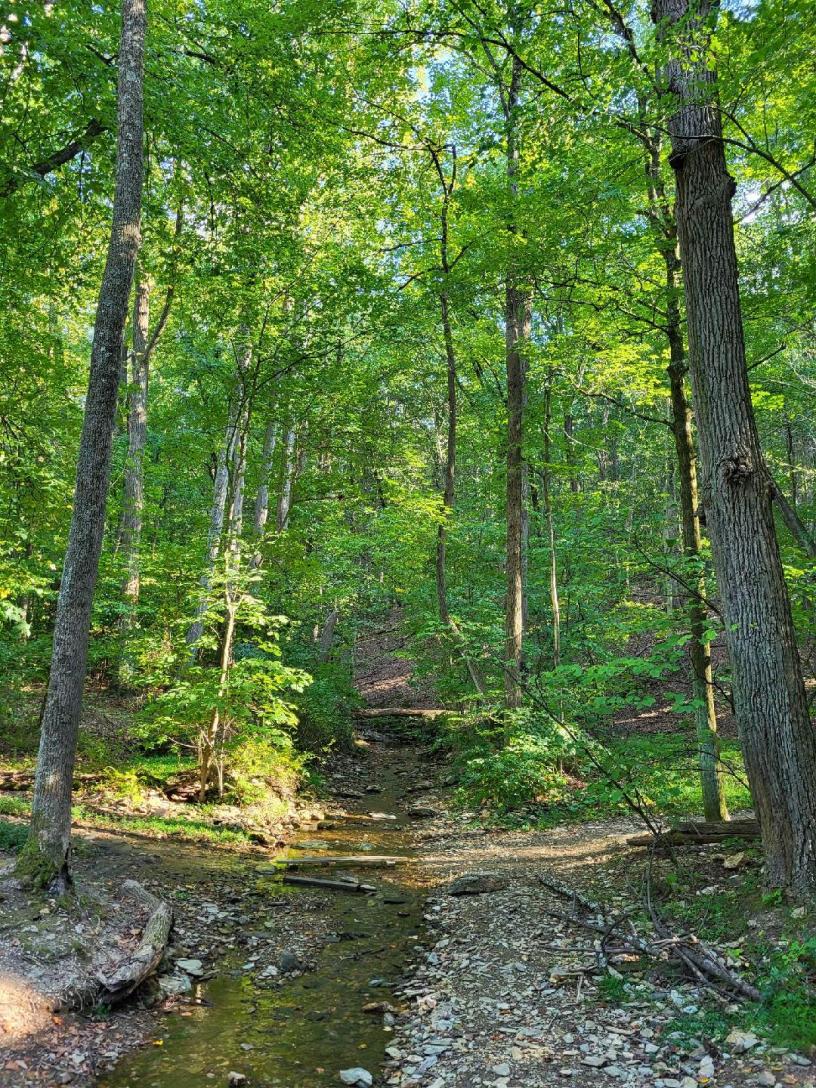
We’ve now started experiment with this within our faith community here at the United Church of Christ at Valley Forge, this past spring and now in the fall, gathering on a Sunday afternoon once a month in one of the many pockets of wildish growth in the area, and practicing a prayerful encounter with what we may learn there about God and ourselves and other beings and our deeper responsibilities to the land. The photo at the head of this post is from our gathering area where two creeks meet at McKaig Nature Center. Please consider contributing to their good work stewarding the land there. Feel free to contact me for more information.
Church of the Wild opens opportunities to be accountable in a personal way for what all is life-giving as well as death-dealing in our inheritance from the Christian tradition. It begins by getting outside our comfortable sense of self and our comfortable spaces and going out to the wilds to pray.
When I shared these reflections with the folks at my church, I invited dialogue and sharing from folks about the ways they have experienced the sacred through encounter with the wilder wider world.
You can watch what folks had to share here.
These reflections are indebted to the insights found in two books:
“Church of the Wild: How Nature Invites us Into the Sacred” by Victoria Loorz
“Speak with the Earth and It Will Teach You: A Field Guide to the Bible” by Daniel Cooperrider
Thanks be to God.
 The Dandelion Way