For several weeks now there has been a prayer making the rounds among progressive Christian folks in social-media-land, called a “Prayer for These Times,” by Bishop Steven Charleston, who is a retired Episcopal Bishop of Alaska & an Elder of the Choctaw Nation:
When they hate, I will love
When they curse, I will bless
When they hurt, I will heal.
I am a servant of the light
I am not afraid of darkness
I will carry on with my work
As a steward of this Earth
And all of her children
When they divide, I will unite
When they rage, I will calm
When they deny, I will affirm.
I will simply be who I am: for that is
What Spirit created me to be.
Amen
This prayer is very much in the spirit of Jesus and of the early communities of Jesus followers and of the saints through the ages, known and unknown. It is a courageous spirit, a spirit of integrity, clear about the truth of goodness that endures despite all that may rally against it.
To pray in this way may be encouraging, to pray in this way may be inspiring, but more than anything else I expect for most of us to pray in this way is challenging. Because, yeah, this sounds nice, but how can you actually live like this?
The key part, I think, is this line, “I am not afraid of the darkness.”
For us to say this with truth requires us to rely on a power greater than ourselves.
This power is what Jesus embodies.
When we look to Jesus’ teachings and the example of his life, we find someone who embodies a fearlessness about facing what we can call “the darkness,” the shadow side of human nature. We find someone who embodies what we can call “the light” of truth and love that relentlessly shines into the shadow.
In Jesus we find someone who directs us to fearlessly face not only the darkness of other people’s capacity to hate and curse and hurt and divide and rage and deny and neglect, but also our own. We can’t meet someone else’s sinfulness with courage and truth and love, unless we can meet our own that way. And we have no hope of doing any of that without the help of a Higher Power. We need God’s help.
To grow toward loving others as ourselves, to doing unto others as ourselves, requires us to grow toward loving God with our whole selves. To grow toward loving God with our whole selves requires us to bring our whole selves into the love God offers us, the love that God offers one and all, as a gift of grace. To bring our wholes selves into the love God offers us requires us to bring our shadows into the light, to let our blind spots be exposed by the light – which initially may feel like a harsh light of unrelenting truth, but soon shows itself to be the light of universal love, which embraces our shadows along with all the other parts of ourselves that are good and noble and beautiful.
This is a transforming experience. It gives us the strength and courage to face the shadows of others – their capacity to hate and curse and hurt and divide and rage and deny and neglect – and to meet those shadows with their antidote. At least as best we can, flawed that we are.
Okay, well, that all sounds nice, but isn’t this all a little too precious, especially right now?
Well, what’s the alternative? And how’s that working out?
It’s kind of like an addict hitting rock bottom. How much unnecessary suffering is enough to say “Enough! I need a way out!”? It may not be glamorous to be sober, but self-destruction, when it comes down to it, is an ugly and painful affair.
In the past few weeks and months in our society (and years, really), a lot of nastiness has come to the surface, civility stripped away. A lot of people have become viciously reactive, their blind-spots have become distressingly clear, at least to those who have gotten run over by them.
Who is this they who have their blind-spots!?
When I say this, people of one political orientation will immediately think about the people of the opposing political orientation who have been mean to them or those they care about.
When someone disrespects or threatens us or those we care about, we see the sinful side of their nature very clearly.
To add to whatever real pain there is, we have the forces of fear and hate, which can imagine monsters in the shadows of others. This gives us a clear enemy.
Then, in our righteous indignation, we get to be the good guys who get the inspiring soundtrack in the Hollywood movie of life as we fight the noble battle against the hordes of evil.
The problem is that this is not how reality really works, it’s not how things actually play out with real human beings in the world as it is. This is why wars bring out the worst in both sides, because all people are capable of both humanity and depravity. When we deny the humanity of our enemy, that brings out our own depravity. This is why civil wars are the worst of all.
Furthermore, this view not actually Christian. It may be surprising to hear that, for how self-righteous and judgmental Christians are famous for being. The truth is that Jesus challenges us to look in the mirror, honestly, and see how our sin is showing too.
Our prayer must not only be, “when they hate, I will love …” but also at the same time, “when we hate, I will love; when we curse, I will bless; when we hurt, I will heal…”
Now, does this mean we don’t hold others accountable for their bad behavior, especially when that is violent and threatening?
Not at all. Jesus was clear about that. He exposed lies and hypocrisy and viciousness; he came to the defense of those his people scapegoated and attacked or used and abuse or neglected and dismissed and denied.
We must look inward and outward at the same time, and see how we all are suffering from the same condition, in one way or another, to one degree or another. We all are suffering from this all-too-human tragedy of sin-sickness. But some are bearing the brunt of it worse than others.
We see the sin-sickness of our opponents, and recognize the suffering it causes. We must also see the sin-sickness of our own side, and recognize the suffering that causes. Most important is that we see the sin-sickness we both share and recognize the suffering that causes, and for whom.
Who is getting caught in the blind-spots of our society as a whole?
Who is being neglected, dismissed, or denied, or scapegoated, or used up and thrown away? We all need to be free. Whether we’re ready to admit it or not, we all are desperately in need of the Grace of God, the truth that sets us free.
I’m better than this. You’re better than this. They’re better than this. We’re all better than this. Yet we have to admit the ways that we’re not better than this, and we need a Higher Power to help us out of the hole we’re digging. Sin is part of who we are, but the truth is God has created us for something better.
Broad and smooth is the road that leads to destruction. Narrow and rough the road that leads to life. But when we earnestly seek, we shall find; when we earnestly ask, we shall receive.
Jesus shows us the way, by the Grace of God.
In this way, we can carry on the work, as stewards of this earth and all her children.
Thanks be to God.
You can watch the video of this sermon here.
Delivered Sunday, November 17, 2024 by Rev. Nathaniel Mahlberg, at the United Church of Christ at Valley Forge.
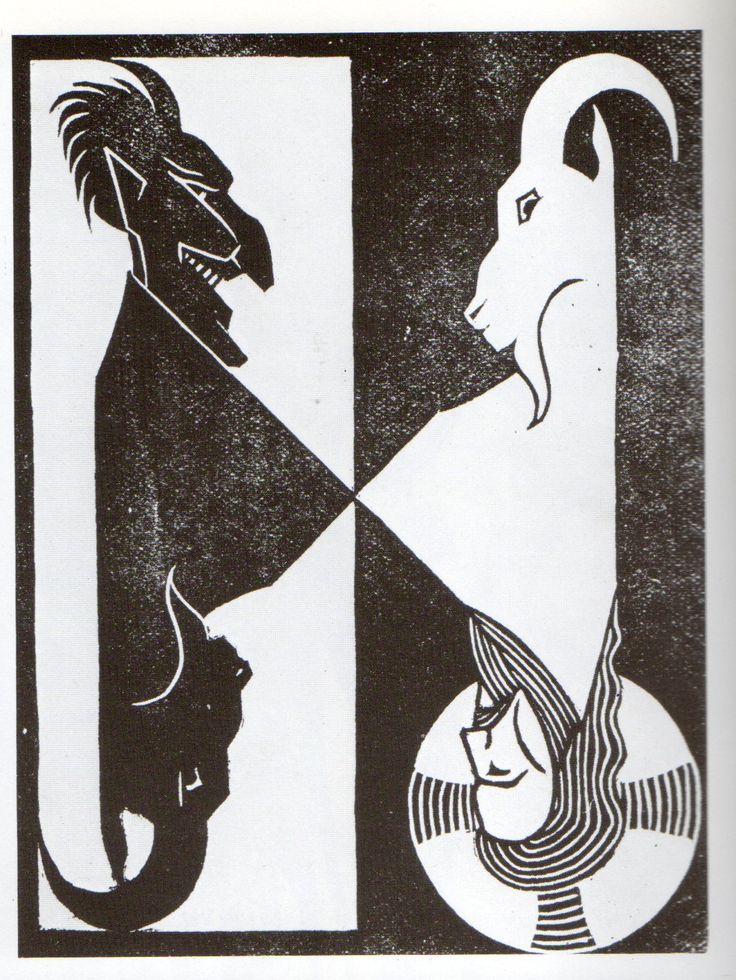
Image: The Scapegoat by M.C. Escher
 The Dandelion Way