Well, folks, it’s the season for spotted lanternflies again. Spotted lanternflies: the invasive winged insects that have spread through Pennsylvania, damaging trees. Every year for the past several years, in midsummer, our local news reminds us that the state environmental and agricultural people have declared open season on this menace to the trees we need for fruit and lumber and healthy forests. Fortunately, the affects, so far, haven’t been quite as bad as they could have been, but it’s still an important concern.
Spotted lanternflies have this funny way of springing off the ground and madly flapping their wings to try to keep gravity from pulling them back down. But they can’t fly, just jump and glide and fall. This makes them a good stomping challenge, as I bet some kids here can tells us. If you don’t get ‘em the first time, you can chase ‘em to where they land and stomp at them again.
A couple summers ago we were walking in a commercial district in Philly, with restaurants and cafes. There were these two women who were sitting at a table outside along the sidewalk, dining “al fresco.” They were dressed up for the occasion.
As we approached, a spotted lanternfly vaulted across their table.
One of the women dropped her fork and shrieked.
But the other woman leapt into action. She sprang out of her seat and flew into a frenzy of stomping at the ground, madly trying to squish the bug. In her heels.
The shrieking woman yelled at her: “Ahh! What are you doing?”
The stomping woman roared back: “I’m. Doing. My. CIVIC. DUTY!”
I’ll tell you, it warmed my heart. Ah, there is still yet nobility in the human spirit. Despite all the cynicism and selfishness, meanness and mercilessness, there still are folks willing to do their duty for the greater good, with no need for reward. Even if that means stomping around in your heels, making a scene, to the distress of your dining companion.
I’ll take what I can get.
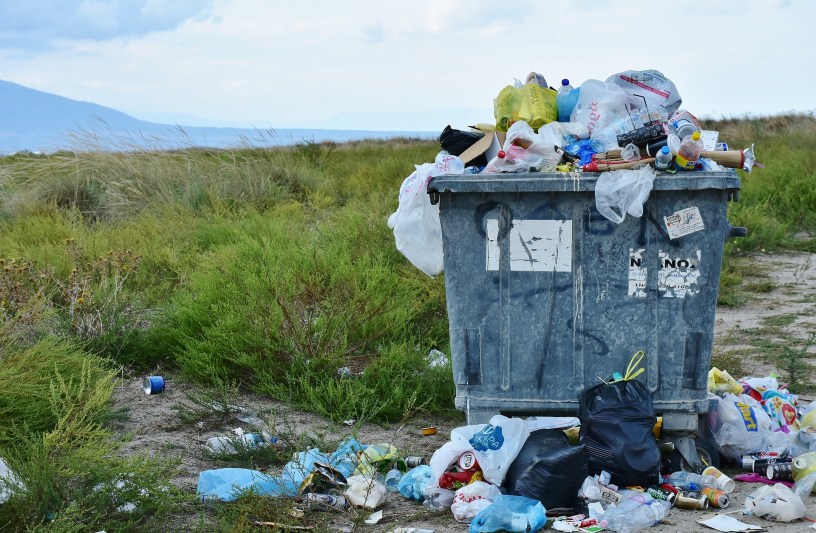
It was an important value in my family growing up that you pick up litter when you see it. It’s our civic duty. Not only do you not litter, but you pick up the litter that other people leave behind, when you can. My Dad would repeat what his Dad would say: “Everyplace you go, be sure to leave it a little better than you found it.” A good way to practice this, to make it a habit, a way of being, is to take care to leave a place a little cleaner than you found it.
What this means is that you are willing to do the right thing even if others are doing nothing. What this means is that you are willing to clean up not only your own messes, but messes for which you are not actually responsible. It needs to be done, and you’re here, and who else is going to do it? You help keep your neighborhood clean, your community clean, your environment clean. You do your civic duty. It’s more than that, it’s a deep ethic, it’s a sacred duty.
At the start of the pandemic I stopped doing this, picking up bits of trash. I was trying to do my civic duty and sacred duty others to help keep people safe, as best as we could tell. But picking up trash went out the window. At first it was because we didn’t yet know how covid-19 spread. But then once it was clear there wasn’t a problem with handling things other people have handled, I just didn’t bother to pick the habit back up. When I’d see litter on the ground I’d just pass it by.
It wasn’t just that I had gotten out of the habit. It was more than that. When I saw litter, I would feel disgusted with humanity itself and think, “Ugh, what’s the point? Let it all go to pot. Maybe we deserve to wallow in our filth.”
I had become fed up with taking responsibility for someone else’s irresponsibility. I had grown weary and resentful and resigned and cynical and disgusted about people just doing what selfishly suited themselves without a care for the problems that causes for others. I’m being honest with you. This was early spring of 2021, for context. It was after a hard winter, if you remember, when it came to morally distressing expressions of destructive selfishness and delusion, harbingers of things to come.
But then one day I was out on a walk with someone from my church at the time, one of these wise elders I have the good fortune of spending time with. In the course of our walk, she suddenly stopped and stooped and picked up a crumpled paper cup. At the street corner she put the cup in a trash can. Nothing to it.
I looked at her and I saw someone with a clean heart, a pure heart, a heart not constricted with judgment or inflated by pride or hardened with bitterness. She just simply did the right thing when the right thing was right in front of her to do.
This convicted me. I realized that when it came to my own heart I had indeed been planting for a harvest of weeds, as the Apostle Paul put it in our scripture reading. As I was nursing my bitterness and resentment, I was letting weeds grow around my heart, choking out what is good and true and right and beautiful and holy, resulting in my weariness for doing what is right.
So, I started again, picking up my neighbor’s litter, as a little daily spiritual practice, a regular exercise of faith. Whether I feel like it or not, just do the right thing.
“Let us not grow weary in doing what is right,” Paul wrote to the community of Jesus followers in Galatia, as we “work for the good of all” (Galatians 6:9–10).
We can be honest that we do sometimes grow weary. Dismayed, distressed, depressed, defeated, forlorn – or just complacent (in the words of a Kris Kristofferson song, “I get lazy, and forget my obligations.”)
This is why it is so good and important to return to the wellspring of our faith and the deep roots of wisdom in our tradition that have seen folks through thick and thin.
This is why faith is a practice. Part of that practice is returning, again and again, to simply doing the next right thing we can find to do, for the benefit of all – whether we feel like it or not.
It helps to continue to remind ourselves that we are in no position to stand in judgment of others or to feel resentful, for we too do things that trash the greater good, we too have benefitted from others cleaning up our messes, we too have relied on free gifts and undeserved generosity of others. Above all we benefit from the gift of grace from God, which we don’t earn by doing the right things or believing the right things or being the right kind of person, but we simply receive as we are – regardless of merit – due to the unconditional love of our God.
When we let this grace into our hearts, it helps us to “be merciful as your Creator is merciful,” as Jesus said. When we let this into our hearts, it helps us to “give to everyone who asks of you,” as Jesus taught. When we let this into our hearts, it helps us to do our duty for the greater good, even if it feels lonely, even when it doesn’t seem like there are enough other people who care.
You see that this is about far more than just picking up thy neighbor’s litter, or stomping on bugs that threaten our trees, as important as those are.
Each of us here have something our heart, if we’re honest to God, that we feel morally convicted about it, called to do what is right for the good of all.
What work can you, can we join to do the right thing, the faithful thing, in the face at that moral crisis?
“Let us not grow weary.”
It helps to find those who have not grown weary and join them. Faith is contagious like that.
So let me offer one last example of folks who have not grown weary in doing what is right:
This past few of weeks I have been fortunate to connect with our partners at the Great Valley Food Cupboard, where we donate the veggies we raise in our church garden; and with the good folks at Alianzas, whose food pantry we collect donations for, which serves immigrant communities in Chester County; and the folks coordinating the service ministries at our sibling church, Old First UCC, who are now welcoming new residents into their supportive housing they just built for folks coming out of the experience of homelessness. Also, the past couple of weeks Rachel and I have both done some volunteering for the Northwest Philadelphia Mutual Aid Collective, which collects and distributes food for seniors, folks with disabilities, and low income folks in ours and surrounding neighborhoods.
I’ll tell you, my faith is strengthened just by being around these strong and humble souls who are just doing the good work week in, week out. I’ll also tell you, every single person I spoke with who helps with these various efforts, in one way or another, talked about how much more difficult their work has gotten this year, how much greater the need and harder it is to access aid. They each were clear sighted that there is every reason to expect that it will very likely get worse for the vulnerable populations with whom they work. Yet, to the person, they did not show a shadow of despair about it, but only greater determination. These are tough souls, who have done the good work through many seasons, and are resolved to continue through the seasons to come. These are folks of strong and clear faith with the unwavering practice of simply doing the next right thing, for the benefit of all.
I thank God for them, I thank God for you all. I thank God that we are never alone, but always have Jesus to guide us and the saints to encourage us.
Thanks be to God.
Delivered Sunday, August 3, 2025, by Rev. Nathaniel Mahlberg, at the United Church of Christ at Valley Forge.
 The Dandelion Way