“God is still speaking”: This is a central teaching in our United Church of Christ. It tells you something important about our approach to faith. Our faith is in an ever-living and ever-loving God, who is both beyond any human understanding and yet intimately involved in the very beings of all created beings. “God is still speaking” means we are open to how God’s involvement evolves, as we humans change and evolve. This means we can be inspired by the biblical testimonies of those who have wrestled with revelations of our Holy Creator’s involvement with creation, and at the same time be on the lookout for the ways that God has continued to reveal Godself. How does God reveal Godself? By supporting and urging and challenging humanity in our struggle to learn and to live out what is true and good.
So, what is true? What is good? How is God still speaking? And how do we know?
These are ultimate questions. These are enduring questions. These are urgent questions.
Among the many crises of our times is a crisis of knowing. How do we know what is true and what isn’t? How do we discern whom to trust or not to trust? Who is telling the truth and who is telling a lie? What is the right way to respond, the right thing to do, and the wrong?
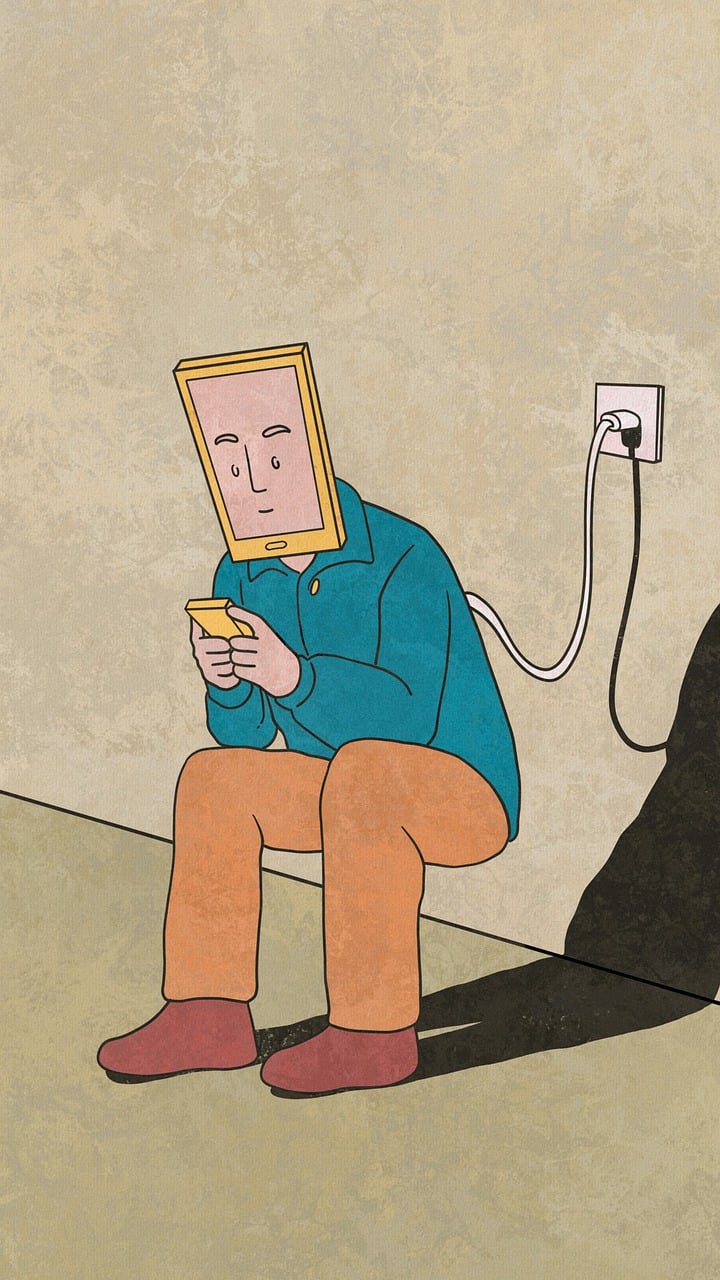
It’s gotten all the more complicated because we are living in an age of pocket audio visual communication devices that double as addictive hallucination machines. From one second to the next, we can go from real-time data of air quality measurements in Melbourne Australia, to a deep fake video that half of all viewers swear is #truth, followed by a real video that half of all viewers swear is #fakenews … then we can hop on a chat with an artificial intelligence algorithm that’s aping the words of a human therapist – or, if you prefer, of Jesus, or the Buddha – and the next moment we can call a real live loved one who lives a continent away…
We are living in an age of hyper-partisan info-bubbles and outrage echo-chambers and cocoons of curated confirmation bias, of platforms competing to cash in on our inclination to rubber neck crash sites, the desire to ogle back-alley brawls and ticketed prize fights, the perverse enjoyment of the spectacle of clashing worldviews, and the self-righteous satisfaction of seeing how one’s opponents exposed as deluded dupes or raging hypocrites (while of course ignoring how that may be true for us).
Those who rise to the top in this fraught and flashy hall of mirrors are very often those most masterful at manipulation – manipulation of attention, manipulation of emotion, manipulation of one’s very sense of reality.
This seems to be the world of Pontius Pilate: “what is truth anyway?” “’Truth’ and ‘goodness’ be damned, I’ll say one thing now and the opposite tomorrow, and call both ‘truth’; What I condemned yesterday, I’ll praise today, and call both ‘good’, if it’s convenient for me and expedient to my self-interest.”
The outcomes of all this are dehumanization, demonization, oversimplification, self-justification, hypocrisy, a whole lot of lies and half-truths gaining traction.
In other words, this is just another turning of the wheel of human sin.
At the same time, all these screens can lead to receiving glimpses of genuine human experiences and perspectives tremendously different from our own; we can access precious artifacts created hundreds of years ago stored in archives thousands of miles away; we can receive moments of genuine connection and inspiration, true acts of beauty shared between living, breathing souls; we can collaborate and find community with others across time and distance.
In other words, it’s not just all teaming with sin and villainy, there is both truth and falsehood, goodness and evil, and everything in between, all flowing through our screens.
It’s all quite human, all-too-human. It many ways it’s very new because of all this real sci fi communication technology brought to you by quantum mechanics and neural network algorithms, but at its heart it’s nothing new. Since humans developed language we have been able to use symbols to tell the truth or to lie. It’s never been easy to figure out what is true and what is good. The world is a complicated and confusing place. People can be manipulative and mean and misguided. We are fundamentally limited beings, even if we can delude ourselves that we’re not.
Yet there are things we can understand. There is plenty about the world that we can learn to be true. There are so many who are earnest and genuine in the pursuit of truth and goodness. There are trustworthy guides, and we can find our inner compass set in our souls.
Through it all, believe it or not, God is still speaking.
What is important above all else as people of faith is that we stay earnest and genuine in seeking out how God is still speaking, and pursuing what is true and what is good.
Are you willing to do that? Are you willing to believe that God is still speaking, somehow through all the tumult and the strife? Are you willing to believe that we can do better than this, God help us? Are you willing to not get cynical, to not get hardhearted, to not despair? Are you willing to believe that there is a truth that can set us free, free from this tangled web of sin? And that truth can be found in the Way of Jesus?
People of faith should beware of cynicism, on the one hand, or gullibility, on the other, when it comes to pursuing the truth.
As followers of Jesus, the kinds of questions we should always try to keep before us – especially when we’re spending time scrolling through our screens or flipping through the channels – are questions like:
“How can I figure out what is true here, and what is false?”
“How can I discern what is good here, and what isn’t?”
“How can I live into the Way of Jesus in response?”
“Does this help me grow in my love of God and my love of others?”
“Is this helping produce the fruits of the spirit in my life? Is this promoting the ‘better angels of our nature’?”
“How can I respond in ways that show my care for what is good and what is true?”
“How can I prioritize what Jesus teaches us to prioritize? Taking the log out of my eye before helping my neighbor take the log out of theirs. Looking out for those who are being trampled in our blind-spots, those whose stories are not being told, the least of these who always suffer the most?” This takes discipline, to have integrity of the heart and the soul. It takes discipline to have integrity of the mind as well. This about what is good and what is true.
So, my friends, lets help each other hear the still-speaking voice of God through our world, and stay true to our pursuit of what is true, and what is good, as we walk together in this Way of Jesus.
Thanks be to God.
Delivered Sunday, September 21, 2025, by Rev. Nathaniel Mahlberg, at the United Church of Christ at Valley Forge.
Image by Hello Cdd20 from Pixabay
 The Dandelion Way