
You can watch video of this Christmas sermon here.
I want to share with you one of my favorite depictions of Mother Mary and Baby Jesus. I have a print of this in my office. This is by Laura James, who is a contemporary American artist who draws on the Ethiopian Christian tradition of sacred art, as well as Afro-Caribbean styles. The image above is her Madonna and Christ-child.
Just look at that gaze between Mary and Jesus, that gaze of love from one to the other. This is what it is like to be held in holy love and to be beheld in holy love, to hold in holy love and to behold in holy love.
Just take a moment to take it in … and allow that love to extend to you, to embrace you.
At Christmas, when we celebrate the birth of the Christ-child, we celebrate the revealing of God’s love. In all of the Holy One’s majesty and mystery, and awesome transcendence, God enters into the human condition, to show us that God knows fully what it is like to be a creature of flesh and blood and bone and breath and spirit.
The most astonishing testimony of the faith of Jesus is that “God is love.” This means not only that God loves, not only that love is from God, but that God is love itself, and where love is, there is God. (1 John 4:7-12).
This is an astonishing statement, which has the power to bust open our hearts. At the core of who and what God is, is love. What this means is that in the core of who and what God is, is relationship. Love is not a solitary endeavor. As the theologian Jurgan Möltmann wrote: “If God is love, [God] is at once the lover, the beloved and the love itself,” (Möltmann, “The Trinity and The Kingdom,” pg. 57). This is in fact a way of approaching the mystery of the Trinity, God’s three-part nature in the Christian experience. Augustine said: “You see the Trinity when you see love … for the lover, the beloved and the love are three” (quoted in Möltmann, pg. 58).
The Gospel of Jesus is clear that we are invited into this love – each of us, all of us, and all of each of us, invited into this love. This love is universal and unconditional. This love has the power to change our hearts.
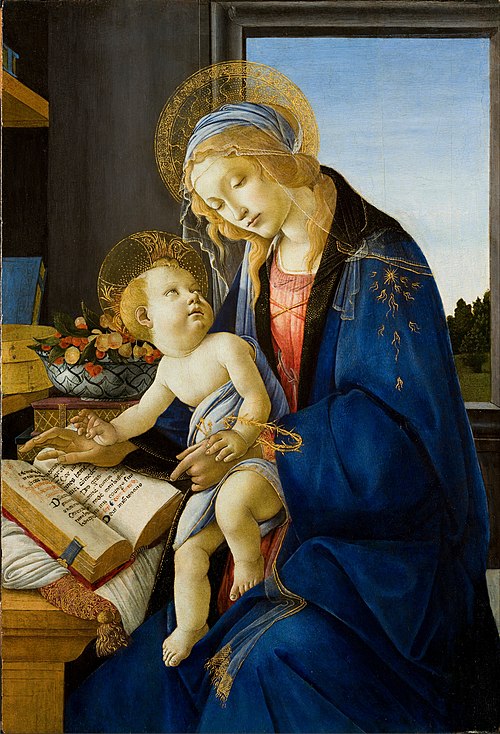
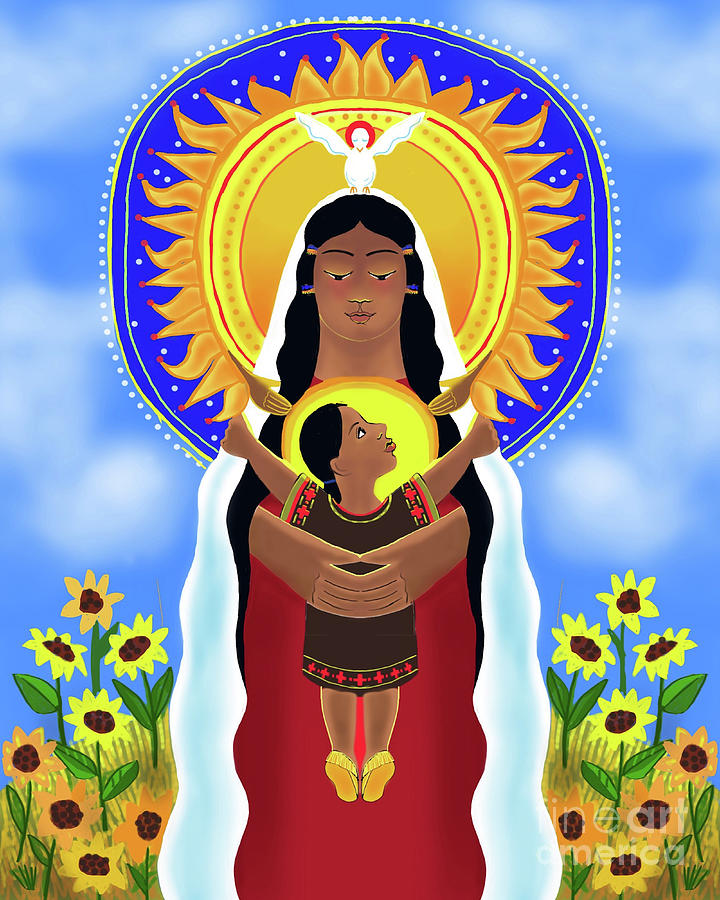
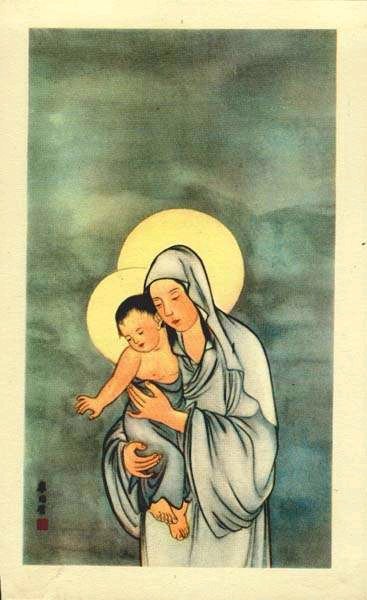
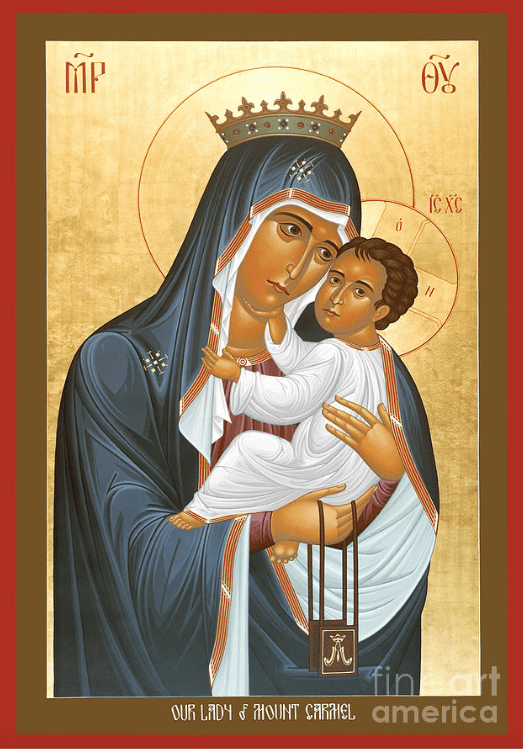
A powerful way to experience this Divine love is by contemplating inspired images of Mary and Jesus, the Madonna and the Christ-child. This is a gateway to God’s love that has resonance across times and cultures. It has a universal power.
So, let me share with you some more images of Mary and Jesus from across the world. I invite you to allow yourselves to be drawn into the holy gaze of love shared by Mary and Jesus.
This is by Sandro Botticelli, the Italian Renaissance painter:
This is a contemporary Lakota Madonna and Christ-child (by Brother Mickey McGrath)
This is a Chinese Madonna and Christ-child:
This is a European style icon (by Robert Lentz):
This is an African style icon (by Kelly Lattimore):

Now, we all know that love is not easy. It sounds lovely to say, “God is love,” and “God so loved the world,” and that we are to “Love God with all our heart and mind and strength and to love one another as ourselves.” But in reality?! It’s the hardest thing in the world. To receive unconditional, universal love; to give unconditional, universal love … this is tough, to say the least – impossible, to say the most – especially with all the painful limitations of our mortal lives in this heartbreakingly busted and beautiful world. We need help from a higher holy power.
This is why I really appreciate the images of Mary and Jesus that are not so pristinely beatific.
Here is a famous Madonna and Christ-child, from Jasna Góra Monastery in Poland (called the “Black Madonna”). I wonder if those of you who have been mothers of infant children can relate to the look on this Mary’s face.

This is Our Mother of Sleepless Nights. Our Mother of I-Love-You-But-God-Help-Me-I’m-At-The-End-of-My-Rope-Right-Now.
Here’s a Coptic Madonna and Christ-child from Egypt. This Mary also has some heavy bags under her eyes, and that hazy distant stare of someone who’s just been toughing it out.

These are sacred icons too, just as sacred as the more placidly beatific images. They show us something of the toughness of love.
This is important because it’s not just love, but the toughness of that love, the toughness of God’s love for us and for the world, that was revealed through Christ. Through all of Jesus’ teaching, and through his actions, through his living, through his dying, through his resurrected life, we see the enduring strength of God’s love for this busted and beautiful Creation. We see this love revealed through Mary as well, in the sweet and fierce and long-suffering love she shared with Jesus – from conception, to birth, though this life and death and beyond. She didn’t run away from loving him when it got hard and scary, even when everyone else had fled.
God loves all of us in this way. God loves us even at our worst – maybe especially at our worst. Nothing we can do can destroy this love. This is true for us as individuals and for us as humanity itself. God loves us even through the crucifying tragedies of people’s refusal to accept this love and be changed by this love and to live by this love. God loves us even through the crucifying tragedies humans subject each other to – through scapegoating and violence and injustice and neglect. It breaks God’s heart, yet God loves us still and offers us always the way to get right.
This kind of love poses an invitation to us, and a challenge.
Jesus said to his followers: “love each other as I have loved you.” This love is from God, and it is to shape us in how we love each other. Jesus makes it very clear that this love does not discriminate and in fact breaks through all of the barriers that the powers of sin try to build up around our hearts.
Jesus goes out of his way to show love and mercy especially for those whom society says are not worthy of love, who deserve to be condemned and cast out and consigned to a bitter or brutal fate. Jesus went even further than this. Jesus identified himself with those who are imprisoned, those who are considered foreigners, those who are without home or food or protection. Jesus said, “That which you do to the least of these, you do to me.” He meant this very concretely. (Matthew 25:31-46)
This is a challenging kind of love. It’s also a liberating kind of love if we allow it to be, for this love unlocks the ways that our hearts can be constricted by the powers of sin.
There are some beautiful artistic expressions of this humanizing power of God’s love that shines through the Christmas story. One contemporary iconographer who does this is Kelly Lattimore, who I believe is Franciscan, in the lineage of St. Francis of Assisi.
Here is a piece called “Tent City Nativity.” This image takes seriously the significance in the Christmas story that Mary and Joseph did not have secure shelter when Jesus was born. Jesus would later identify himself with those who are in need of safe homes.

And here is a depiction called “La Sagrada Familia” (the Holy Family), as migrants in the desert of the borderlands between the United States and Mexico. This finds important meaning in the story in the Gospels about Mary and Joseph needing to flee with Jesus from their homeland to protect themselves from the threats of a tyrannical king. They found refuge in Egypt until it was safe for them to return to Galilee. Jesus would later clearly identify himself with foreigners who are in need of welcome.

These are images of holy love, just as much the other icons that convey a comforting sense of safety.
The last image I will leave you with returns to that comfort. This is by Pablo Picasso. In his famous “Blue Period,” Picasso did a series of Madonnas with Child. These paintings caused a scandal because the women and children who were models for Picasso were from a women’s prison in Paris. These women were largely arrested in police sweeps of red-light districts. These babies were born in prison, out of wedlock.
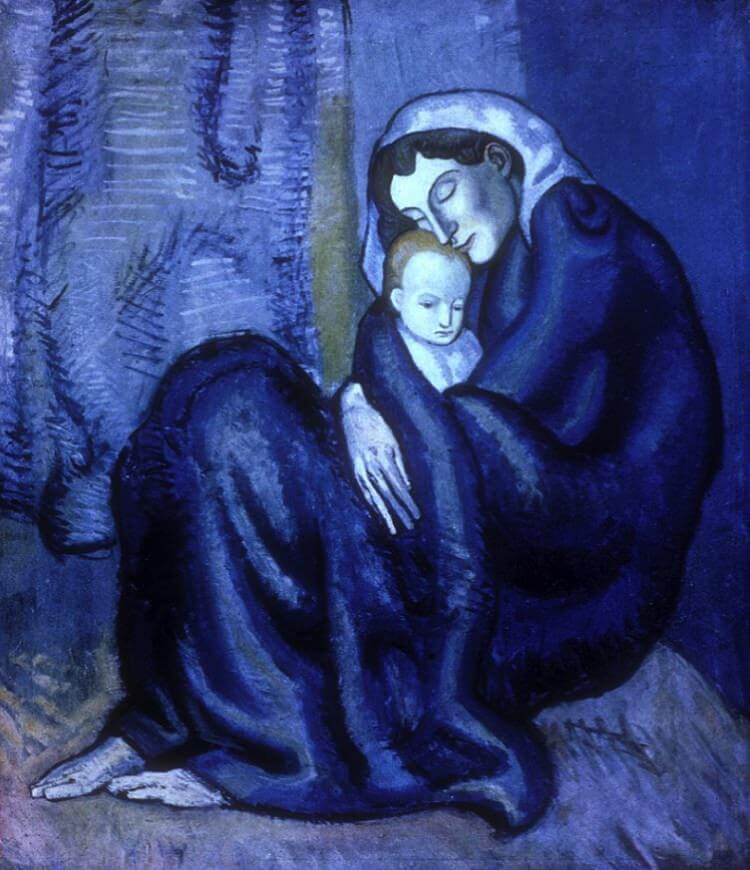
Here the great artist helps us to witness the sanctity of the love this woman shares with her child.
This is a glimpse of the Realm of Heaven on Earth, a taste of the love that God shares with all of us, as revealed to us on Christmas day.
For all this I give thanks to God. Merry Christmas.
Thanks be to God.
Delivered Christmas Eve, 2025, by Rev. Nathaniel Mahlberg, at the United Church of Christ at Valley Forge.
 The Dandelion Way