Our Christian religion is based on basically three years of one person’s life 2,000 years ago. That’s how long – or I should say short – Jesus’ public ministry was, between his baptism and his death in his early thirties. Yet for how intensely Jesus clearly lived in those three years, as the gospel stories tell it, he often went off by himself into the wilderness to pray. He practiced taking regular time alone to be with God, out away from human society, communing alone with the wideness of the Creator and the wildness of Creation.
But he didn’t stay out there. Jesus always came back. Jesus always returned and reconnected with his people, with his society, with the urgent demands of their deepest soul needs. In this way, Jesus stayed connected with God, he stayed connected with his people, and he stayed connected to the truest purpose of his life and was able to use his life as a gift that met the deepest needs of humanity.
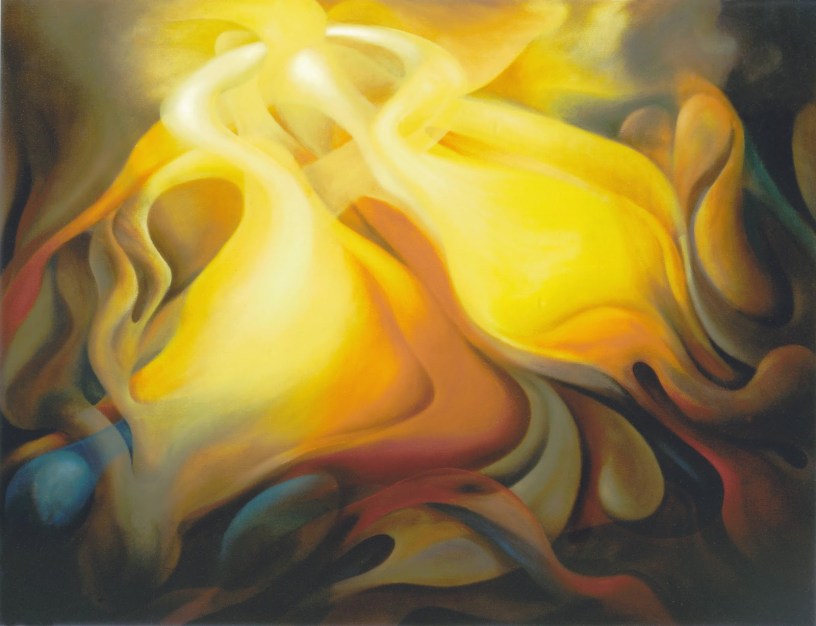
In this way, Jesus’ lived his brief life with the incandescent intensity of a living bridge, a bright filament between the realms of heaven and of earth.
When Jesus underwent his metamorphosis on the mountaintop, he was joined by two of his ancestors who had also been transformed by mountaintop revelations of the living God, Moses and Elijah. Three of Jesus’ disciples witnessed this strange and awesome unveiling. They wanted to make the experience last, they wanted to stay there in the transcendent glory. But this moment – this infinite, intimate moment – was not meant to last forever, this side of paradise.
Like the Prophets before him, Jesus needed to come back down the mountain and plunge back into earthly life as it is. But he came back transformed, and transformed in the way that his people needed him to be, whether they knew it or not.
Moses, for his part, returned with the revelation of a holy moral code to teach his people how to live lives revolving around the reality of the Holy I Am That I Am. Reserving worship and reverence for the Holy One alone, beyond all human and earthly powers. Respecting the rights of others for life and livelihood, trust and truth.
For Jesus, he re-enters the here-below and here-and-now as nothing less than the living embodiment of the heavenly realm on earth, a being whose entire mind, body, heart, and soul is incandescent with the love of God, love for God, love from God, radiating out to each and all of God’s creatures.
This is awesome. A beauty and a power beyond words.
But, as Jesus told the Godsmacked discipled, however glorious this moment may be, it would not lead to a safe and comfortable life for him, or for them, (or for us). When Jesus came down from the mountaintop, his holiness acted like a medicine, drawing out the poison of his society’s sin-sickness, to expose sin’s brutality, its falsity, its inhumanity … but also to expose sin’s ultimate futility before the Living God. Jesus took upon himself all the evil of the world, he took the role of all those vulnerable to the predations of evil, he identified himself with “the least of these,” he became a scapegoat for the inhumanity of humanity … all to prove the hope of faith that God’s Love prevails in the end.
All of this is to serve for us as a model for how to live as followers of Jesus, as we are, in our lives and times. I’ll keep reminding us that the word “Christian” means something like “Little Christling.” We are to be as Christ for each other, and to witness and support and protect that-of-Christ in one another, in each and everyone. This is especially needed, as Jesus taught, in service of the dignity and sanctity and humanity of those whose value as human beings is most denied and trampled on.
Who is that now?
This means we are to be agents of love in the face of hate. This is a way of life that involves risk, and danger. Risk to our own ego. Risk to our own comfort. Risk in the face of the dangerous forces in this world that detest universal love and human solidarity.
What does that look like now?
To do this, as Jesus demonstrated, we must stay connected to the realm of heaven, as well as stay connected to the realm of earth, in a way that transforms our lives into lives of service for humanity.
In other words, the model for our lives as Christians is: Go up to the mountaintop, and come down from the mountaintop, back to your people. Repeat as the Holy Spirit leads. Through it all be led by love.
Commit to space and time to commune with the God of all Creation, to behold and contemplate Christ in all his glory, to allow ourselves to be held and beheld as beloved. Commit to coming back from those experiences and engaging wholeheartedly with the world-as-it is, using what we experience and how we are transformed through communion with God through Christ to guide us in how to live with compassion and courage for the sake of that-of-God in others, amidst all the beauty and brutality of life.
One great teacher of this in 20th Century America was Howard Thurman, the great elder and mentor of the struggle that became the Civil Rights Movement. I’ve preached about him before, I’ll preach about him again. I’m glad I’m not alone in that.
Here is what Father Adam Bucko recently taught about Howard Thurman in a recent sermon:
“Writing and preaching in the shadow of segregation and racial terror, [Thurman] said, ‘There is in every person an inward sea, and in that sea there is an island, and on that island there is an altar.” To spent time there, he said, is our ‘crucial link with the Eternal.’
“Thurman was not describing a private refuge from history,” Bucko says. “He was speaking to people whose bodies and communities were under assault. He knew that when the world tries to define you as less than human, you must return again and again to that inward altar, where your dignity is anchored in God and not in the approval of the powerful.
“But returning to that altar is not the end. It is the beginning. … To touch the Eternal within us is to discover that we cannot remain neutral when that same divine imprint is denied in others… God’s image is not protected by silence. It is honored in struggle… This is why contemplation and resistance belong together.”
This, again, was from a recent sermon by Father Adam Bucko, who is a Polish-American priest and teacher of contemplation and sacred activism.
If we lose touch with the ways we are connected to that altar before the Eternal within us, if we forget to go up the mountaintop to pray before God’s transcendent glory beyond us, we can get mired in despair before evil, or constricted by hateful responses to hate.
The temptation can go the other way as well: To go up the mountaintop and just stay there, to want to evaporate into the spiritual realm and leave behind the earthly. This is what has been called “spiritual bypassing.” Using religion or spirituality as a way of avoiding the problems and difficulties and discomforts and contradictions of life and life-with-others.
But we are embodied souls and ensouled bodies for a reason. We have been given our lives in our times on earth for a reason.
We are meant to live as Jesus modeled, becoming living bridges between the here-beyond and the here-and-now. This is why we pray as Jesus taught us to pray, that “Thy Kingdom come, they will be done, on earth as it is in heaven.”
Next week is the start of Lent. The theme we will be exploring here is “On earth as in heaven.” How do we live, you could say, as “citizens” of the realm of heaven while we live engaged with the deep needs of our fellow creatures in the realm of earth? To do both in self-giving love? In Lent the invitation, the challenge is to adapt a new spiritual practice or spiritual disciple. I invite us all to prayerfully discern two practices or disciplines. One that connects with the realm of heaven, in self-giving love; and one that connects us to the realm of earth, in self-giving, justice-seeking, peace-making love, in service of some deep and urgent need among our fellow denizens of the realm of heaven, especially in ways that involves some risk and discomfort and courage and greater vision.
As Christians, “little-Christlings,” we find our deepest life purpose in seeking to live as Jesus lived, in our modest but meaningful ways, according to the gifts and challenges God has given us, to live as living filaments incandescent with the love of God, love for God, love from God, radiating out to each and all of God’s creatures.
Thanks be to God. Amen.
Delivered Sunday, February 15, 2026, by Rev. Nathaniel Mahlberg, at the United Church of Christ at Valley Forge.
 The Dandelion Way