The Quaker teacher Parker Palmer has a poetic version of the Lord’s Prayer that helps me to earnestly explore what it means when pray, “Thy Kingdom come, thy will be done, on earth as it is in heaven.” What are we praying for when we pray this? How does praying in this way shape how we live out our faith, how we live with the heart of Christ in this Way of Jesus in our lives and our world as it is?
Here is Parker Palmer’s rendering of the prayer Jesus taught his followers to pray:
Heavenly Father, heavenly Mother, / Holy and blessed is your true name. / We pray for your reign of peace to come, / We pray that your good will be done, / Let heaven and earth become one. / Give us this day the bread we need, / Give it to those who have none. / Let forgiveness flow like a river between us, / From each one to each one. / Lead us to holy innocence / Beyond the evil of our days – / Come swiftly Mother, Father, come. / For yours is the power and the glory and the mercy. / Forever your name is All in One. Amen
Notice how he renders “Thy Kingdom come, thy will be done, on earth as it is in heaven”:
We pray for your reign of peace to come, / We pray that your good will be done, / Let heaven and earth become one.
When you say these words in a prayerful way, what do you feel?
Do you feel a sense of that peace within you and outside of you?
Or do you feel a yearning, is there a yearning that stirs in you?
Does it lead you to feel something of the pain of the distance between our world as it is or between our hearts as they are and what it could be when God’s good will is done and heaven and earth are one?
What it is it like to pray these words in a time of war, as we are now living through?
… Lead us to holy innocence / Beyond the evil of our days …
If there is in you at least some yearning that these words draw out – some sense deep inside that, yes, we could be better than this, we should be better than this – then hold on to what is stirring in you, even if it is small. Honor that stirring, that yearning. Care for that stirring, that yearning, as you would a seed.
For Jesus said all we need is faith the size of a mustard seed. (Matthew 17:20). That’s it. Just a little faith, a little trust, just a little stirring, a little taste, a little glimpse, a little whiff of a peace that surpasses understanding. Even something like a half-remembered dream, or an unsettled sense that there is indeed more to this world and beyond than meets the cynical eye in a cynical age, more to humanity than man’s inhumanity to man.
All it takes is a little inkling for us to have faith enough for Jesus to work with, just the size of a mustard seed.
When Jesus said that the “kingdom” of heaven is like a mustard seed, he was showing how different it is than the mighty kingdoms of this earth. (Matthew 13:31-32) Mustard seeds are seeds for weeds. Farmers didn’t sow them in their fields, like the person in Jesus’ parable – they sowed them at the outskirts of their land, otherwise they would contaminate the more valuable crops. And they don’t grow all that big – mustards at best are the mightiest of all the shrubbery. They don’t in fact grow all that big – mustards at best are the mightiest of all the shrubbery. The black mustard plant in the deserts around the Mediterranean average maybe four feet tall. Rarely one will grow to the size of a small tree. This is indeed big compared to the size of the tiny seed, but it is not in fact very impressive.
What would tower impressively over the landscape of Galilee is the cedar tree. The Cedar of Lebanon. Listen to this from the Prophet Ezekiel, who was railing against the hubris of war mad nations (Ezekiel 31:1-6, 10, 12):
The word of the Lord came to me:
Mortal, say to Pharaoh king of Egypt and to his hordes:
Whom are you like in your greatness?
Consider Assyria, a cedar of Lebanon,
with fair branches and forest shade,
and of great height,
its top among the clouds.
The waters nourished it,
the deep made it grow tall,
making its rivers flow
around the place where it was planted,
sending forth its streams
to all the trees of the field.
So it towered high
above all the trees of the field;
its boughs grew large
and its branches long,
from abundant water in its shoots.
All the birds of the air
made their nests in its boughs;
under its branches all the animals of the field
gave birth to their young;
and in its shade
all great nations lived.
Therefore, thus says the Lord God: Because it towered high and set its top among the clouds, and its heart was proud of its height … its branches have fallen, and its boughs lie broken in all the watercourses of the land; and all the peoples of the earth went away from its shade and left it.
Jesus is drawing on this image from the Prophet Ezekiel, cleverly sending up the proud with their bombast and bombs, satirizing those who place their faith in mighty rulers and seek their salvation through war and domination.
Jesus is making it clear his “kingdom” is not like that.
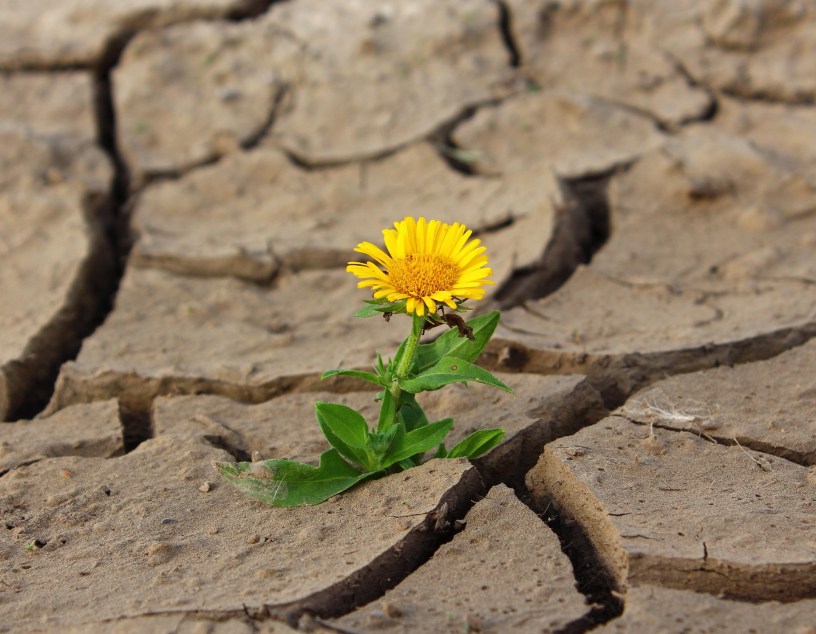
The “kingdom” of heaven, is not like the mighty cedar but like a little seed of a spicy weed that grows between the cracks in things. It grows into a gnarly kind of shrub that sprays out more tiny seeds like glitter bombs. Once those tiny seeds get going they can be hard to uproot and contain.
This “kingdom” is upside-down and inside-out, where the last shall be first and the first shall be last, the proud will be humbled and the humble uplifted. This “kingdom” compels us to let go of every pretense and identification that is not our simple, clear, true nature as children of the living God. Jesus was very clear, time and again, that living in this way according to this holy reality requires we strive for peace.
The realm of heaven is a spiritual realm, that is both within us and without us and among us and beyond us. This also can be a physical and social reality, that is both within us and without us and among us and beyond us. Let heaven and earth become one. This realm, this good way of Jesus brings with it a peace that surpasses understanding. It is here and now whether we know it or not. It is here and now not by our power or will, but by God’s.
This is very different sort of “kingdom” from many human kingdoms. Jesus uses this term basilea to highlight the contrast with the ways of heaven-on-earth, the ways of life centered around the reality of the true God, on the one hand, and, on the other hand, the ways of earthly rulers who love to play god over other people’s lives and to make an idol of their own power and act like their self-interest should be the center of the universe.
In contrast to the basiliea Jesus urges us to follow, war is the worst kind of idolatry, especially when waged in the name of God as all sides of our current war are claiming to do. No one glorifies God by raining down death and destruction and terror and chaos. That’s merely bowing before the idol of a petty tribal war deity.
We are living in a time of war, where there are forces that are trying to press us into the service of inhumanity, the annihilation of human life, to worship or fear and thus obey a false tribal war god. It is important that we respond as people of peace, as people of a greater faith in the true God, the Holy Creator of all life.
This is expressed well by our General Minister of the United Church of Christ, Rev. Dr. Karen Georgia Thompson, in a prayer she recently shared:
“Giver of life, how you must grieve at the callous infliction of death and destruction, the easiness with which people choose the path of violence when you have shown us a better way through your love for all humankind … In these moments, we cry out for peace, while leaders who do not know how to blush choose bluster, bombast, and bombs.
“We pray for your intervention and a settling of your Spirit on the hearts of those which are now set on the path of war: turn them back to the path of life. We pray for your intervention in the midst of our fear, that we persist in your truth with courage as we seek peace and justice for all. Protect those who are now in harm’s way and send your healing spirit to each one afflicted by acts of violence. Show us a way where there appears to be no way, a peace where there is now no peace, a path to restoration of community and a just and lasting peace. Amen.”
What we need to do is let ourselves yearn for it, yearn for even a little taste of it, and let that yearning lead us. It just takes a teeny amount of faith in this realm of heaven within us and around us and beyond us, a teeny amount of hope, a teeny amount of trust in a domain and reign of peace. It also takes us being willing to give ourselves over to caring for this seed, letting ourselves die a little for it, to release some of our fears and some of our petty ego-games, and lead us to scatter those wild seeds and trust in their scrappy flourishing with the help of God.
It helps to start with what may feel small. To tend to the little seed of faith within us, to pray for it, to pray from it … and to let it lead us to ways of living it out. Moments of humanity and love. Moments of connection across divides. Moments of moral courage. Moments of deep faith in the Holy Creator of all life, who shows us the ways of life and death and life beyond death.
I will leave you with the words of a 1st century Rabbi named Tarfon, commending on the prophet Micah:
Do not be daunted by the enormity of the world’s grief. Do justly, now. Love mercy, now. Walk humbly, now. You are not obligated to complete the work, but neither are you free to abandon it.
The work continues, my friends, the work of faith in the realm of heaven on earth through whatever history brings. And whatever your contribution to it in your way in your time, is a blessed and is a blessing. For this I give thanks to God.
Thanks be to God.
Delivered Sunday, March 22, 2026 by Rev. Nathaniel Mahlberg at the United Church of Christ at Valley Forge.
 The Dandelion Way