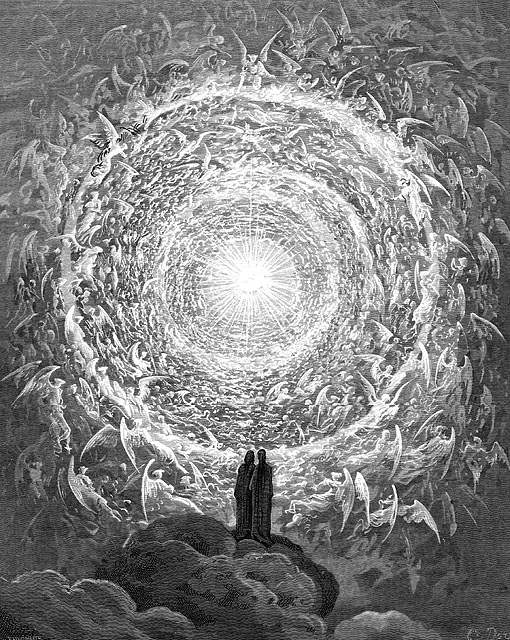
Many folks who have been drawn into lives of faith and of spiritual practice and of service to God and to humanity and to this world, have been propelled, compelled on this journey because of experiences of wonder.
There is nothing like being wonderstruck for stirring up the kind of ultimate questions that often lead folks to religious exploration and faith. There is nothing like being wonderstruck for inspiring the sense of Holy Mystery pervading and underlying this universe, a sense that there is much more to existence than meets the eye, more to heaven and earth “than can be dreamt of by your philosophy,” to quote Shakespeare. There is nothing like being wonderstruck for inspiring the sense of reverence before this Holy Mystery, and commitment to trying to keep this sacred dimension of things at the center of our lives. And there’s nothing like being wonderstruck for getting us unstuck, unstuck from a constricted, anxious, desperate, limited view of ourselves and of others and of this world, and opening us to greater horizons of possibilities, greater horizons of meaning.
So, it is a good and rich spiritual practice to allow ourselves to return to wonder. Stay open to moments of wonder in our lives, and calling back to mind and heart those those moments of wonder in your lives, keep them close and ponder them in your hearts. Holding a new life in your arms, with wonder before the astonishing mystery of life, and mystery of this life you hold – wonder of wonders, you are here, who are you? Beholding a beloved pass from this life, breathing their last, their life-force blowing away like embers in the wind – wonder of wonders, you are here no longer, yet you are still with us, who are you? Wonder before whatever marvel too beautiful to comprehend, often startlingly mundane, some marvel in our midst that presses us to the limits of what we know and invites us to a leap of faith out beyond.
Wonder is available to each and all of us. Wonder is available in the midst of our everyday lives. Consider this an invitation to a little more Wow! in our lives.
At the same time, there are some special souls who have special gifts for conveying wonder. One of our practices of Wow can be to spend a little more time with the influence of these special souls. A little more Yo-Yo Ma in our lives; a little more Annie Dillard, now of blessed memory. A little more of anyone drawn by wonder into exploring and investigating deeply the objects of their wonder, of delving the mysteries, but in ways that only deepen their wonder, rather than collapsing it into pat explanations. Many scientists, mathematicians, artists, musicians, mystics discover that their investigations into the exquisite complexity of things only deepen their astonishment, only open to new horizons of mystery.
For many years I have loved this poem by the scientist and writer Johanne Wolfgang von Goethe:
“Years ago the mind with pleasure/Keenly could investigate/Could experience the measure/Nature lives by to create/And it is the One Eternal/Multiply self-manifest/Small the big is, big the small/All things to their type attest/ Self-insistent, always changing/Near and far and far and near/Birth of shapes, their rearranging/Wonder of wonders, I am here.” – (J. W. von Goethe, Parabasis [c. 1820], in: Middleton (trans.), Goethe’s Collected Works, vol. 1, p. 155.)
The astrophysicist Rebecca Elson, who studied dark matter, has a whole book of poems she wrote while dying of cancer, published posthumously under the title “A Responsibility to Awe.” (from The Universe in Verse by Maria Popova, pg. 32).
I love that: We have a responsibility to awe. That is why we must honor and practice wonder, why it is important to stay wonderstruck.
This is especially true for people of faith. We are the ones who dare to bandy about this word “G*d,” as if we can be so sure we know what we’re talking about. The way we talk about “G*d” should be invitations to wonder.
Whom did Moses encounter on that holy mountain? When he asked for a name, the reply he received was a wondrous puzzle for the ages: “I am that I am.” Then he received a name, which cannot be pronounced nor contained by letters, forever standing as a symbol for Mystery, an enticing, obscure, inviting, luminous: YYHHWWHH …
Let me share with you the words from a Christian theologian from Syria or Greece in the late fifth or early sixth century CE who wrote under the name Dionysius the Areopogate:
“And is not this in reality the wonderful Name, that which is above every Name—-the Nameless—-that fixed above every name which is named, whether in this age or in that which is to come? Also, as “many named,” as when they again introduce It as saying, “I am He, Who is—-the Life—-the Light—-the God—-the Truth.” And when the wise of God themselves celebrate Him, as Author of all things, under many Names, from all created things—-as Good—-as Beautiful—-as Wise—-as Beloved—-as God of gods—-as Lord of lords—-as Holy of Holies—-as Eternal—-as Being—-as Author of Ages—-as Provider of Life—-as Wisdom—-as Mind—-as Word—-as Knowing—-as preeminently possessing all the treasures of all knowledge—-as Power—-as Powerful—-as King of kings—-as Ancient of days—-as never growing old—-and Unchangeable—-as Preservation—–as Righteousness—-as Sanctification —- as Redemption—-as surpassing all things in greatness—-and as in a gentle breeze.—-Yea, they also say that He is in minds, and in souls, and in bodies, and in heaven and in earth, and at once, the same in the same—-in the world—-around the world—-above the world—-supercelestial, superessential, sun, star—-fire—-water—-spirit—-dew—-cloud—-self-hewn stone and rock—-all things existing—-and not one of the things existing.”
This same theologian later in his life wrote that the path to contemplating the Divine is best not through finding the right name or symbol or image or concept, but rather through cutting away every name, symbol, image, or concept that arises before God, through negation –not this, not that, not this, not that … until the mind, heart, and soul falls open, wonderstruck within what a later Christian contemplative called the luminous cloud of unknowing.
If you are feeling bewildered by this, great! Let that bewilderment lead us to wonder.
When it comes to our religious practice, wonder before the Divine is a good antidote to the dangers of obsessive dogmatism.
One who stays wonderstruck before the Divine is incapable of killing in the name of God.
One who stays wonderstruck before the Divine is incapable of demeaning others in the name of God, incapable of depriving others of their humanity, their dignity, their essential needs, in the name of God.
Yet we know this happens all too often, to this day. We must beware of “gods” that are too small, “gods” that are, in the end, merely idols of parochial human self-interest.
God is universal or not at all.
How do we now God is not an old man on a throne in the sky who sends the peoples of this nation to kill and conquer the peoples of that nation, who raises up this ruler over that ruler, this gender over that gender, this race over that race, this team over that team? Because that is clearly a “god” made in the image of a human being, clearly a “god” that is infinitely far from transcendent of petty human categories. It’s just a recycled tribal war god. It doesn’t take a genius to see that when two armies slaughtering each other both believe that “God” is on their side, both are wrong, both are merely making and idol of their narrow self-interest. A child can think up a “God” that is more transcendent than that. As our daughter said to me when she was four years old, “God loves everyone, even the mean ones.”
God is universal or not at all.
But wait, when Moses was wonderstruck by his encounter with the Holy I Am, didn’t that experience compel him to lead his people out of slavery, to struggle for their freedom against another nation, the Egyptians? The Hebrew prophets in other times said that their encounters before the unutterable glory of God led them to rail against all the ways the rich, righteous, and powerful abuse the poor and powerless, saying, as Mary did, that God will humble the haughty and uplift and lowly.
These are responses to revelations of the universality of God, a universality that embraces the humanity of all, which means it uplifts the humanity of those who have been cast off as scum and trampled underfoot. But as Jesus makes abundantly clear, this is not to be done at the expense of anyone’s humanity, even of the oppressors’, for, as Jesus taught, God makes the sun to shine and the rain to fall on the wicked as well as the righteous. This is Jesus reminding us to keep front and center the wondrous, transcendent universality of G*d.
All of us, everyone, prophets included, by dint of being human beings, are each and all susceptible to parochialism, to a narrow and exclusionary and self-revolved view of ourselves and of others, of this world and of God. This can and does come to color how we talk about God and practice our religion, however sincerely it is inspired. Furthermore, many of us have been damaged by viciously limited idol images for “God” that advance a supremacist hierarchy and a chauvinistic church.
This is why we have a responsibility to awe. We have the responsibility to continue to return to awe before the wondrous Holy Mystery of G*d. Being wonderstruck helps us to get unstuck from constricted images of the Divine.
So we return to practices of opening ourselves before the Holy, Holy, Holy …
In the words of Rabbi Abraham Joshua Heschel: “live life in radical amazement … Get up in the morning and look at the world in a way that takes nothing for granted. Everything is phenomenal; everything is incredible; never treat life casually. To be spiritual is to be amazed.”
So, stay wonderstruck my friends. Stay wonderstruck. Thanks be to God.

